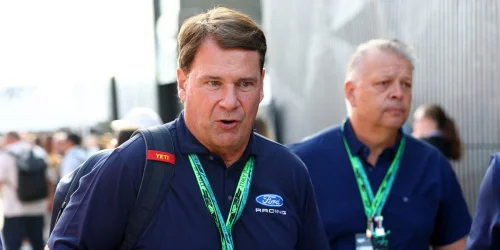
Ford Motor Company will continue to offer manual transmissions in key performance models, CEO Jim Farley has stated, framing the decision as a commitment to driving enthusiasts. The announcement comes as rival automaker General Motors has moved away from the technology, citing superior performance of modern automatics.
Farley's comments, shared exclusively with Business Insider, highlight a deepening industry divide over the future of the driver-controlled gearbox. While demand has dwindled for decades, Ford sees a dedicated, passionate market for vehicles like the Mustang GT and Bronco.
An Industry at a Crossroads
Ford's cross-town rival, General Motors, stopped offering a manual Corvette with its current mid-engine model in 2020. Tony Roma, GM's executive chief engineer for performance cars, stated the company has "no plans to talk about a manual transmission," arguing their cars are "faster and essentially better" with the automatics they produce.
This contrast in strategy underscores a broader trend. According to a recent count by Dub Magazine, only 24 model-year 2026 vehicles in the US will offer a manual option, a list subject to ongoing changes.
The Case for the Clutch
"We offer manual because some people really love driving them. They love being connected to the car," Farley said. He reinforced this commitment, adding, "As long as customers care that deeply, we're going to keep building them."
Farley cited a personal anecdote from a recent trip to Vatican City to illustrate the enduring appeal. "When I met Pope [Leo], he shared a great story about owning a manual Fusion earlier in his life," Farley recounted. "That tells you something — this isn’t nostalgia. It’s about engagement. They are fun."
A Shrinking Landscape
The manual transmission's foothold in the market continues to weaken. This month, Toyota and BMW are discontinuing the Supra and Z4 sports cars, including their manual variants. In a contrasting move, Nissan's redesigned Z car will retain a manual option as standard for the 2027 model year.
Ford's stance, therefore, positions it as a key holdout for a traditional driving experience increasingly rare in an era of electrification and advanced driver aids.