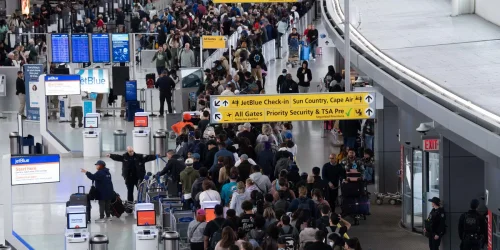
The recent Senate deal to fund the Department of Homeland Security has not resolved the deepening staffing crisis within the Transportation Security Administration (TSA), which threatens to disrupt travel during the upcoming summer season. Acting TSA head Ha Nguyen McNeill confirmed this week that more than 480 officers have resigned since the government shutdown began, exacerbating existing pressures on airport security.
Compounding the problem, airlines are grappling with a sharp spike in jet fuel prices, now at approximately $197 per barrel, nearly double the typical average. This cost surge, coupled with restricted airspace forcing flight path revisions, is leading carriers to increase airfares for passengers.
Staffing Shortfall Risks World Cup Security
Acting TSA Administrator Ha Nguyen McNeill issued a stark warning regarding the agency's capacity to handle major events. "The upcoming summer travel period and events like the World Cup pose a significant challenge," McNeill stated. The critical issue is the four-to-six month training pipeline for new TSA officers, a timeline that conflicts with the start of major summer events in less than three months.
While the 480 resignations represent a small fraction of the TSA's total workforce of roughly 50,000, the loss of trained personnel during a peak recruitment and training lag creates a tangible operational gap. The Senate's funding agreement, which must still pass the House, is seen as a first step but does not immediately address this staffing deficit.
Airlines Pass Soaring Costs to Travellers
The travel industry faces a parallel crisis on the cost front. Aviation analysts note that jet fuel prices have spiked to levels not consistently seen in recent years, directly impacting airline operating expenses. This surge is attributed to broader market volatility and supply chain constraints.
In response, several major airlines have already announced increases in ticket prices. "The combination of higher fuel costs and more complex routing is a perfect storm that consumers will ultimately fund," explained one industry analyst. The situation has left travel experts uncertain about how to advise clients on planning and budgeting for summer trips.
Road Travel Offers Little Respite
For those considering alternative travel by car, relief is also scarce. Nationwide gasoline prices remain elevated, diminishing the cost-saving advantage of road trips over air travel. This has also triggered responses in the gig economy, with delivery service companies offering new incentives to support drivers who are struggling with high fuel costs.
The convergence of these factors—security staffing shortages, elevated fuel prices, and operational complexities—paints a challenging picture for the summer travel season. Industry observers warn that disruptions could be widespread, affecting both last-minute and carefully planned journeys.