Airlines worldwide are beginning to cancel flights and reduce services as a severe jet fuel shortage, triggered by the ongoing war between the US, Israel and Iran, disrupts global supply chains. The conflict has trapped oil in Middle Eastern storage facilities, causing prices to soar above $100 a barrel and availability to plummet.
Jet fuel prices reached $195 per barrel at the end of March, nearly doubling from the end of February when the war began. International Energy Agency (IEA) Executive Director Fatih Birol warned that the loss of oil supply in April would be double that of March, leading to growing scarcity. "We are seeing that in Asia, but soon, I think, in April or May, it would come to Europe," Birol stated in a podcast interview.
European Carriers Brace for Impact
Ryanair, Europe's largest airline, is considering route reductions. CEO Michael O'Leary told Sky News that while no disruption is expected until early May, continued conflict risks supply problems in Europe by May and June. "We don't expect any disruption until early May, but if the war continues, we do run the risk of supply disruptions in Europe in May and June," O'Leary said.
Lufthansa is preparing contingency plans that could see up to 40 aircraft grounded, a company spokesperson informed Bloomberg. Similarly, Scandinavian Airlines (SAS) will cut approximately 1,000 flights, primarily on short-haul Nordic routes, a spokesperson confirmed to The Wall Street Journal. "The sharp increase in fuel costs is affecting the entire European aviation system," the SAS spokesperson said.
Global Ripple Effect
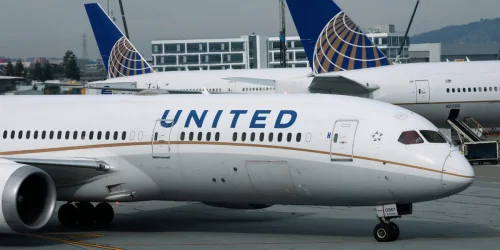
The crisis is extending beyond Europe. United Airlines CEO Scott Kirby announced in a staff memo that the carrier will "tactically prune" unprofitable flying, cancelling some off-peak and red-eye flights. Kirby highlighted the staggering cost: "If prices stayed at this level, it would mean an extra $11 billion in annual expense just for jet fuel. For perspective, in United's best year ever, we made less than $5B."
In the Asia-Pacific region, Air New Zealand will reduce its schedule by about 5%, cancelling 1,100 flights from the start of May, CEO Nikhil Ravishankar told 1News. In Vietnam, Vietnam Airlines has suspended seven domestic routes and plans to cut flight volume by 10-20% monthly if prices reach $160-$200 per barrel, according to Reuters. Local carriers Vietjet Air and Bamboo Airways are also implementing cuts.
Analysts Warn of Worsening Shortages
Industry analysts point to a perfect storm of high demand and constrained supply. June Goh, a senior oil market analyst at Sparta Commodities, noted on X that jet fuel requires specialised storage, meaning reserves are lower than for other fuels like gasoline. "Travel has gotten a lot more expensive in Asia, with many airlines adding fuel surcharges or downright canceling flights," Goh wrote. "Europe is facing imminent jet fuel supply shortages. Brace yourselves."
Data analytics firm Argus Media reported this week that "the UK is the most exposed country in Europe to tightening diesel and jet fuel supply."
The situation leaves airlines with few options beyond cutting capacity and raising fares, signalling a turbulent period for global air travel as the geopolitical conflict continues to destabilise energy markets.