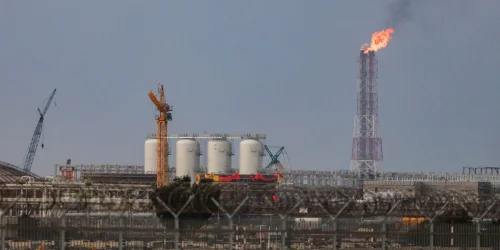
A leading Goldman Sachs analyst has warned of a potential "very painful" shock to global natural gas markets, driven by significant damage to Qatar's critical export infrastructure. The disruption comes amid heightened geopolitical tensions in the Middle East.
Samantha Dart, co-head of global commodities research at Goldman Sachs, stated that attacks have knocked production offline at QatarEnergy's Ras Laffan Industrial City, the world's largest liquefied natural gas (LNG) facility. Qatar supplies approximately one-fifth of the world's global LNG.
Seasonal Pressure and Supply Crunch
Unlike oil, gas markets are highly seasonal, relying on inventory builds between April and October to meet peak winter demand in the northern hemisphere. "Whatever impact that has had on inventories today, we have to offset it completely by the end of October," Dart said in the bank's "Exchanges" podcast, recorded before a recent two-week ceasefire announcement.
The supply shock is severe. QatarEnergy has indicated repairs may take three to five years to fully restore capacity. Dart interprets this timeline as evidence the damage is catastrophic: "It doesn’t take three years to fix anything. What they are really saying is these two liquefaction trains were so damaged that we need to start over."
Price Rally and Market Response
Natural gas prices have already surged by 50% to 70%, yet Dart expected a stronger rally. So far, higher prices have only prompted limited switching to alternatives like coal, not the deeper demand destruction needed to rebalance the market.
A temporary buffer has come from China, which redirected surplus gas into global markets after a mild winter, providing short-term relief, particularly in Europe. However, this relief is fading.
Global System Lacks Slack
The analyst emphasised the global system has no spare capacity. The United States, the world's largest LNG exporter, cannot quickly fill the supply gap. If the conflict is resolved swiftly, prices could ease.
If disruptions persist, Goldman Sachs sees potential for gas prices to climb another 50% to 100% from current levels as markets are forced to ration demand more aggressively. "There is a risk that this just drags so much that it makes the process very painful," Dart concluded.