A senior NATO official has warned that member states are failing to procure weapons collectively, undermining efforts to rebuild stockpiles quickly and cost-effectively. Tarja Jaakola, NATO's Assistant Secretary General for Defence Industry, Innovation, and Armaments, stated that joint procurement is the most efficient method for acquiring military hardware.
Speaking at the UK think tank Chatham House, Jaakola revealed that defence industries continue to receive individual requests from nations, a practice she said must be avoided. "When I talk with the industry, the industry keeps telling me many nations still approach them individually with their individual requirements," she said.
Cost Inefficiency and Strategic Risk
Jaakola argued that this fragmented approach results in higher per-unit costs and fewer resources per development programme compared to collaborative efforts. She emphasised the need to use taxpayers' money efficiently, noting that "the cost escalation within defence systems is higher than in the civilian market."
The official stressed that shared weapons systems also enhance interoperability, making it easier for allied forces to operate together in a conflict. She called for a greater embrace of "collaboration, co-production, and joint procurement" across the 32-nation alliance.
Ukraine War Exposes Traditional Weaknesses
Russia's full-scale invasion of Ukraine has triggered a surge in defence spending across NATO but has also highlighted the shortcomings of traditional acquisition cycles. Officials note that these cycles are too slow and produce arsenals that are too small for modern, high-intensity warfare.
Jaakola pointed to Ukraine as a critical example, stating it has demonstrated an ability to develop and modify weapons far more rapidly and cheaply than typical NATO processes allow. She called this an "important lesson" that requires a change in "mindset and our own way of working."
Push for Change Meets Slow Progress
In response, NATO has increasingly advocated for multinational contracts, declaring last year that member states are invited to "make joint procurement the preferred procurement choice." The European Union has also adjusted its rules to incentivise such collaborative purchases.
NATO Secretary General Mark Rutte and European Commission President Ursula von der Leyen have both publicly endorsed the cost-saving and strategic benefits of joint procurement. However, a briefing presented to European Parliament members last year revealed that joint procurement across the EU remains far below set targets, despite potential annual savings of several billion euros.
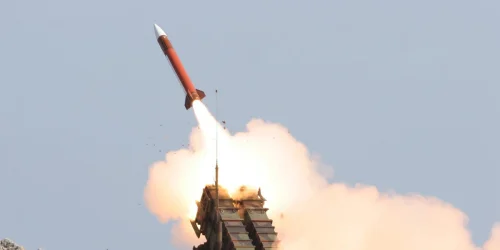
Jaakola cited the co-production of interceptor missiles for the US-made Patriot air defence system, including new production facilities in Germany, as a "very good example" of effective collaboration. Her comments indicate that such successes remain the exception rather than the rule within the alliance.