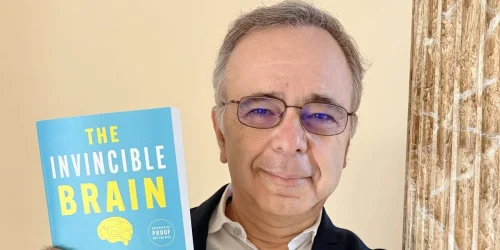
A leading neurologist has stated that while artificial intelligence (AI) presents new challenges, it also offers significant cognitive stimulation by overwhelming users with vast amounts of information to process. Dr Majid Fotuhi, a neurologist and adjunct professor at Johns Hopkins University, explained that the human brain's inherent neuroplasticity allows it to adapt to this modern digital environment.
Dr Fotuhi, who researches neuroplasticity and Alzheimer's disease prevention, described neuroplasticity as the brain's ability to change and rewire itself at any age, leading to physical anatomical changes. He identified two key brain structures: the cortex and the hippocampus. These areas are responsible for cognitive functions like reading, writing, problem-solving, with the hippocampus being particularly involved in learning and memory.
Brain Adaptation to Modern Challenges
Dr Fotuhi emphasised the extreme malleability of these brain structures, noting they change with environment, cultural experiences, food, and mental training. "The brains of people today are very different from the brains of people from 200 years ago, because there were different challenges than we have now," he stated. He is not overly concerned about AI's impact, arguing that using AI to access advanced information challenges the brain to handle, process, and verify a deluge of data.
While AI may reduce manual tasks like typing emails or mental arithmetic, it provides far more information than traditional sources like newspapers and television did 50 years ago. This constant processing requirement, according to Dr Fotuhi, constitutes a form of cognitive exercise.
Daily Exercises for Cognitive Fitness
To maintain brain health, Dr Fotuhi recommends 20 to 30 minutes of brain exercise daily, integrated into routine activities rather than as a separate session. Key exercises include deep, attentive reading—analysing details like the perpetrators, damage, and implications of a news event—and actively memorising information.
"I memorize a lot of phone numbers and all my credit card numbers. I have made a habit of memorizing everyone I meet," he said, also advising people to limit GPS use. He recommends hobbies that engage multiple brain networks simultaneously, such as dancing, which requires interaction, listening, and coordination, or learning new sports like golf or pickleball.
"My general recommendation is to do the things you enjoy. There are many ways you can challenge the different networks in your brain. You don't just have to sit down and do crossword puzzles or Sudoku," Dr Fotuhi added.
The Risk of Over-Reliance on AI
Dr Fotuhi personally limits his reliance on AI for trivial information or drafting communications. "It's tempting to ask AI to generate it for me, but I actually sit down, write it, and edit it. Then I'll ask ChatGPT to double-check it or critique it," he explained. He warns against becoming cognitively lazy, stating, "You need to challenge your brain in every opportunity. Don't become lazy and let AI do everything for you, because then you become so dependent on it that you can't function by yourself."
He concluded that AI has both negative and positive aspects, making more information available while also challenging our brains with a greater volume of data than ever before.