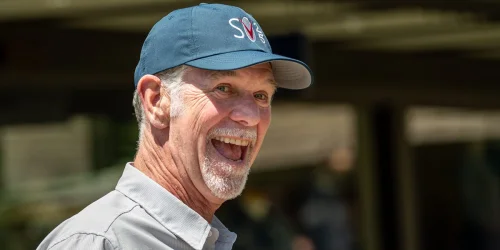
Reed Hastings, the retired co-founder and former CEO of Netflix, has revealed how he balanced leading a multi-billion dollar company with sustaining his marriage of 35 years. Speaking on Graham Bensinger's "In Depth" podcast, Hastings shared key lessons learned from a demanding career that spanned decades and produced two children.
While stating he is "not qualified to give marriage advice," Hastings outlined practical strategies that countered the pervasive "founder mode" work ethic in tech. His insights stem from a pivotal period of marriage counselling in the 1990s, which he credits with changing his perspective on prioritising family.
The Counselling Revelation: From "Hypocrite" to Clarity
A marriage counsellor helped Hastings realise he was a "systematic liar" regarding his stated family values, a revelation that profoundly shaped his future approach. "I was essentially a hypocrite and not living with my values," Hastings admitted. This clarity allowed him to consciously decide when to prioritise family over work, accepting that he would have to "occasionally be disappointing at work" to be a present husband and father.
Key Strategies for a Demanding Career
Hastings advocated for several concrete actions to maintain a partnership. His primary rule was to always answer his wife's call, regardless of his location or company. "Interrupt whatever you're doing — take the call," he advised, noting that this availability gives a partner a "very valuable" sense of importance.
He also emphasised the necessity of budgeting time and setting clear expectations with a spouse about work absences. By establishing a fixed number of missed dinners or nights away per month, it gives a "sense of control" and reduces "constant negotiation," preventing work from completely overtaking personal life.
Legacy of a Balanced Leadership
Now retired, Hastings reflects on the outcome of applying these principles. His marriage endured the intense pressure of building Netflix into a global streaming giant. He expressed feeling "very, very lucky" to now enjoy more time with his wife, framing his career and personal life not as a trade-off but as a managed integration.
The lessons stand in contrast to the round-the-clock work culture often glorified in Silicon Valley, offering a model for sustainable leadership that acknowledges life beyond the boardroom.