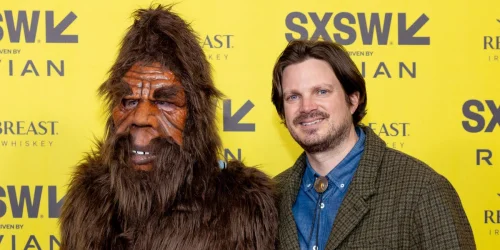
A new documentary has unearthed footage that appears to show a rehearsal for the most famous piece of Bigfoot evidence ever recorded, sending shockwaves through the cryptid's online community. The film, "Chasing Bigfoot," premiered at the SXSW festival and presents a 1966 clip that strongly suggests the legendary 1967 Patterson-Gimlin film was an elaborate hoax.
For nearly 60 years, the Patterson-Gimlin film has been the cornerstone of belief for many who think a large, undiscovered hominid roams North America. The grainy, 59-second footage shows a tall, hairy, bipedal creature—commonly called Bigfoot or Sasquatch—walking through a Northern California forest before glancing over its shoulder. Its authenticity has been fiercely debated but never conclusively disproven, making it sacred evidence within the community.
'The Pillar of This Religion'
The newly revealed footage was given to documentary director Marq Evans by a colleague whose late father worked in a film lab in the 1960s and had connections to the men behind the original film, Roger Patterson and Bob Gimlin. This clip shows a different man in a fur suit, alongside Bob Gimlin on horseback, in a forest that resembles Washington state more than Northern California.
Based on film markings, it was shot a year before the public release of the Patterson-Gimlin film. Evans and experts featured in the documentary posit it was a "dry run" or rehearsal for the famous hoax. "I never thought this would happen in our lifetime," said Joshua Kitakaze, a former believer active in Bigfoot research groups. "The film was the pillar, that was the cross of this religion. It was the No. 1 thing."
Community in Turmoil Over Unseen Evidence
The documentary's limited release has created a confusing and divisive atmosphere online, where most dedicated believers have not seen the new evidence firsthand. On forums like the r/Bigfoot subreddit, members express anguish and cognitive dissonance. "I do know that I am internally coping," one user wrote. "The [Patterson-Gimlin] Footage has been the most credible and clear-cut source of proof we have (had)."
In the absence of the full film, skepticism and modern conspiracy theories have flourished. Some community members have dismissed the 1966 footage as a potential AI-generated deepfake. Director Marq Evans acknowledged this reaction, drawing a parallel to the 'fake news' phenomenon. "Because something could be AI, anything could be dismissed as AI," he told Business Insider.
A Believer's Changed Perspective
Eric Palacios, who runs a YouTube channel investigating cryptids, attended the SXSW screening. He entered as a believer in the Patterson-Gimlin film's legitimacy but left convinced it was a hoax. His subsequent online video describing his shock has made him a target for harassment from staunch believers within the community.
"I don't know if it's changed my feelings on the existence [of Bigfoot]. It's changed my feeling on the community 100%," Palacios stated. "I was kind of disgusted the way some of these people were acting." Despite this, Palacios maintains a sliver of belief, citing numerous eyewitness reports over decades. "If one of them is true, then it's true. That's the way I look at it."
The controversy ensures the Patterson-Gimlin film will undergo its most intense scrutiny in decades. As "Chasing Bigfoot" seeks wider distribution, the core evidence for a North American Sasquatch faces its greatest challenge, potentially altering a vibrant subculture built on a minute of grainy footage.