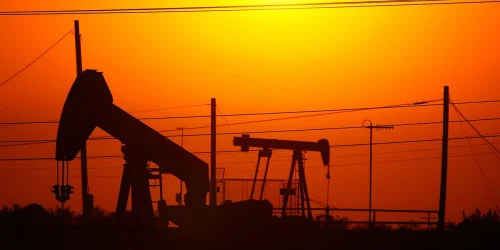
Global oil prices rose sharply at the start of trading on Monday following a direct threat from US President Donald Trump against Iran's critical infrastructure. The escalation centres on the strategic Strait of Hormuz, a vital maritime chokepoint for global energy supplies.
In a post on his Truth Social platform on Sunday, President Trump issued an ultimatum, demanding Iran reopen the Strait by Tuesday. "Tuesday will be Power Plant Day, and Bridge Day, all wrapped up in one, in Iran. There will be nothing like it!!! Open the Fuckin' Strait, you crazy bastards, or you'll be living in Hell - JUST WATCH! Praise be to Allah," the president wrote.
Immediate Market Impact
Contracts for Brent crude, the international benchmark, were trading at $109.57 per barrel by 6 p.m. New York time, up from Friday's close of $109.24. West Texas Intermediate (WTI) contracts saw a more pronounced jump, rising 3% to $115 a barrel after closing at $111.54 on Friday.
The threat follows Iran's effective closure of the Strait of Hormuz in late February, a retaliatory move after the US and Israel began bombing campaigns against Iranian targets. Approximately one-fifth of the world's seaborne oil and liquefied natural gas passes through this narrow waterway.
Broader Economic Consequences
The closure and associated geopolitical shocks are rippling through the global economy. In the United States, the national average price for a gallon of gasoline has surpassed $4 for the first time since 2022, when Russia's invasion of Ukraine triggered a similar spike.
Rising energy costs are also contributing to increasing grocery prices. The aviation sector is feeling significant pressure, with jet fuel prices reaching $195 per barrel at the end of March. These rising operational costs and supply shortages have forced some airlines to either cancel flights or pass additional fees on to travellers.
Context and Stakes
The Strait of Hormuz, located between the Persian Gulf and the Gulf of Oman, is arguably the world's most important oil transit point. Its closure represents a severe threat to global energy security and market stability. Previous tensions in the region have consistently led to volatility and price increases in oil markets.
The current standoff marks a significant escalation in rhetoric from the US administration, directly linking military action against civilian infrastructure to the reopening of the maritime route.
Next Steps and International Response
With President Trump's Tuesday deadline looming, international observers and energy markets are braced for further developments. The explicit threat to target power plants and bridges represents a potential shift in military strategy. The global community, particularly energy-importing nations, is monitoring the situation closely for impacts on supply chains and inflation. No official comment from the Iranian government on the ultimatum was immediately available.