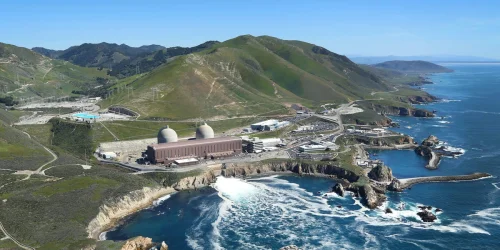
Pacific Gas & Electric (PG&E) has implemented the first commercial on-site generative artificial intelligence tool at a US nuclear power plant. The system, named Neutron, is now used by all 1,300 employees at the Diablo Canyon Power Plant in California to search billions of data points across millions of regulatory and operational documents.
The AI tool was developed in partnership with the nuclear-focused AI startup Atomic Canyon. Its deployment marks a significant technological shift for the plant, which had been slated for closure in 2025 before state legislation extended its operational life to 2030.
Pivoting from Shutdown to Extended Operation
The need for the AI solution arose from a dramatic change in the plant's future. In 2016, PG&E planned to wind down operations at Diablo Canyon by 2025, citing environmental concerns about its coastal location near seismic fault lines. However, in September 2022, California Governor Gavin Newsom signed SB 846 into law, extending the plant's operations through October 2030.
"We had to pivot to continue to operate," said Maureen Zawalick, PG&E’s Senior Vice President and Chief Risk Officer, who has worked at the utility for 30 years. With regulatory deadlines looming and job attrition from the planned shutdown, Zawalick identified AI as a way to streamline the plant's immense paperwork burden.
Building a Nuclear-Specific AI
The collaboration began in January 2024 when Zawalick met Trey Lauderdale, CEO and founder of Atomic Canyon and a local resident living 25 miles from the plant. Lauderdale, whose background is in heavily regulated healthcare, aimed to build an AI tool that understood nuclear terminology better than general models like ChatGPT.
To train its AI model, Atomic Canyon's team downloaded 53 million pages of publicly available industry data from the US Nuclear Regulatory Commission (NRC). In May 2024, the startup partnered with the Department of Energy's Oak Ridge National Laboratory in Tennessee, using its Frontier supercomputer to further train the model on nuclear terminology.
How Neutron Works at the Plant
Neutron connects to Diablo Canyon's six on-site data systems—which hold engineering records, design updates, and regulatory filings—via the internet, not the cloud. This allows staff to perform web-based searches from their computers. The tool is built and run on Nvidia's AI platform.
"We have over 9,000 procedures to operate and maintain the plant," Zawalick said, highlighting the scale of documentation. "And we're just one power plant." Previously, workers had to manually search multiple, separate systems to find necessary information.
Rollout and Measurable Impact
After a pilot with a small beta-test group in early 2024, PG&E rolled out Neutron in phases beginning in July 2025, including training sessions for employees. By the fall of 2025, it was available to all plant personnel.
The impact has been substantial. A PG&E spokesperson stated that by January 2025, Neutron's search and AI summaries "significantly reduced" the total time required to find documents. Zawalick provided a concrete example: an investigation into a safety valve issue that previously required a 12-person team about 180 days to retrieve all documentation was completed by a similar team in just 40 days using Neutron.
Future Implications for the Energy Sector
Looking ahead, Zawalick believes tools like Neutron could ease the regulatory and administrative burden of building new energy infrastructure. "A tool like this will really help with regulatory filings, construction, and engineering," she said, pointing to potential applications for future solar, wind, or nuclear facilities needed to meet growing US energy demand.
The project at Diablo Canyon is part of a broader trend of AI adoption in critical infrastructure, demonstrating how generative AI can move beyond chatbots to solve specific, high-stakes industrial challenges.