Starcloud, a startup building data centres in space, has raised $170 million in a Series A funding round led by Benchmark and EQT Ventures. The investment, closed 17 months after its Y Combinator demo day, values the company at $1.1 billion, making it one of the fastest startups to reach unicorn status.
The funding underscores growing investor interest in orbital computing as terrestrial data centre expansion faces resource and political hurdles. However, Starcloud's business model hinges on unproven technology and significant capital expenditure to overcome the high costs of launching infrastructure into space.
Ambitious Launch Schedule and Technical Hurdles
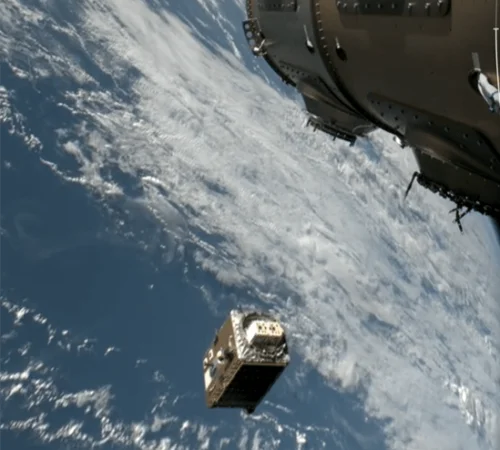
With total funding now at $200 million, Starcloud launched its first satellite, equipped with an Nvidia H100 GPU, in November 2025. A more powerful version, Starcloud 2, is scheduled for launch later this year and will carry multiple GPUs, including an Nvidia Blackwell chip, an AWS server blade, and a bitcoin mining computer.
The company's long-term plan centres on Starcloud 3, a 200-kilowatt, three-tonne spacecraft designed to launch from SpaceX's Starship rocket. CEO and founder Philip Johnston stated this could be the first orbital data centre cost-competitive with terrestrial ones, targeting energy costs of approximately $0.05 per kilowatt-hour—but only if commercial launch costs fall to around $500 per kilogram.
"If it ends up being delayed, we’ll just carry on launching the smaller versions on Falcon 9," Johnston told TechCrunch, acknowledging that competitive energy costs are contingent on Starship flying frequently, which is not expected until 2028 or 2029.
A Nascent Industry Facing Immense Challenges
The space data centre industry remains in its infancy. While Nvidia unveiled its Vera Rubin Space-1 chip modules recently, none have been produced or shared with partners. The number of advanced GPUs in orbit is in the dozens, compared to the nearly 4 million Nvidia sold to terrestrial hyperscalers in 2025.
Scale presents another stark contrast: SpaceX's Starlink network, the largest in orbit with 10,000 satellites, generates about 200 megawatts of power. In comparison, over 25 gigawatts of data centre power capacity is under construction in the U.S. alone.
Johnston argues Starcloud holds a lead, having deployed the first terrestrial GPU in orbit to train an AI model and run a version of Google's Gemini. "An H100 is probably not the best chip for space, to be honest, but the reason we did it is we wanted to prove that we could run state of the art terrestrial chips in space," he said. This experience, which included the failure of an Nvidia A6000 GPU during launch, informs future designs.
Competitive Landscape and Future Outlook
Starcloud is not alone in pursuing orbital data centres. Competitors include Aetherflux, Google’s Project Suncatcher, and Aethero, which launched Nvidia’s first space-based Jetson GPU in 2025. The most significant potential competitor is SpaceX itself, which has sought U.S. government permission to operate a million satellites for distributed space computing.
Johnston, however, sees room for coexistence. "They are building for a slightly different use case than us," he explained, suggesting SpaceX would focus on serving its own workloads for Grok and Tesla, while Starcloud positions itself as an independent energy and infrastructure provider.
The path forward involves solving a laundry list of technical challenges, from efficient power generation and cooling—Starcloud-2 will feature the largest deployable radiator on a private satellite—to synchronising hundreds of GPUs across spacecraft using powerful laser links for the largest AI training workloads.