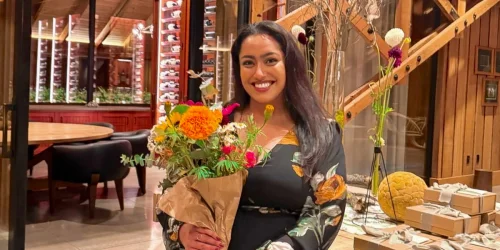
A woman who has always taken the lead in organising her social circle has described the emotional toll of being the perpetual 'planner friend'. After decades of initiating conversations and making plans, she decided to step back to see if her friends would reciprocate the effort.
The experiment, conducted as she approached her 30th birthday, led to months of minimal contact and forced a reassessment of these relationships. She found that while a break provided personal space, it also highlighted a fundamental mismatch in how she and some friends value communal connection.
The Weight of Constant Initiation
Having hosted events since age 11 and consistently organising outings through university and into adulthood, the planner role felt "innate" to her, influenced by her parents' priorities. However, the constant energy required to maintain these connections eventually became draining. "They say you can't pour from an empty cup. Unfortunately, the water had drained from mine a long time ago," she stated.
Her temporary withdrawal from initiating plans was met with limited reciprocity. While there was not complete "radio silence," with some friends checking in or vaguely suggesting activities, no concrete plans were made by others. Consequently, she went several months without seeing most friends, aside from a single wedding.
Questioning Self-Worth and Friendship Dynamics
The lack of initiative from her social circle led to intense self-doubt. She questioned if she was "a burden" or expecting too much from friends with busy lives. She also wondered if her own lack of an extended family or partner made friendship feel "more integral" to her, and whether she was simply "not an important part" of her friends' lives.
Despite the initial self-care benefits of pulling back, she was ultimately unhappy. "I genuinely enjoy hosting, making plans, and bringing my friends together. Not doing these things made it feel like something in my life was missing," she explained.
Re-engagement and Lessons Learned
After a couple of months, she resumed her planner role, sending texts and scheduling meet-ups, which immediately improved her sense of connection. However, the experience taught her that while she doesn't need relationships to be "perfectly 50-50," they cannot be "100-zero."
She plans to have honest conversations with friends about wanting more initiation and will invest less energy in draining relationships to make space for new friends who "prioritise community the way I do." She cites a 2022 study in the Journal of Personality and Social Psychology, which found people underestimate how much a quick check-in text can mean to a recipient.
The experience underscores that friendships require work, especially in adulthood, but that appreciation for the 'planner friend' and occasional reciprocity are crucial for balanced, sustainable relationships.