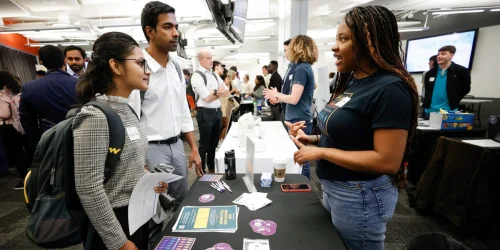
For many university seniors graduating this spring, securing employment is proving to be a protracted and challenging process. Career centre leaders from several institutions report that while graduates are still finding roles, job searches are taking longer and require more persistence than in previous years.
The data reflects this difficulty. The unemployment rate for recent graduates rose to approximately 5.7% by the end of 2025, up from 5.3% in the third quarter, according to the New York Federal Reserve. Concurrently, underemployment has increased, with 42.5% of graduates working in jobs that typically do not require a degree—the highest level since 2020.
Shifting Landscape for Entry-Level Roles
The nature of available positions is changing. Andy Chan, who leads the Office of Personal and Career Development at Wake Forest University, noted that while overall job listings are up year-on-year, there are fewer entry-level postings in fields like marketing, finance, and human resources. This is particularly true for roles centred on routine analysis or administrative work.
"These roles still exist, but the companies don't need as many people to do them," Chan told Business Insider. He explained that the baseline expectation for new hires has shifted, with employers now seeking candidates who can perform at a higher level beyond basic administrative or research tasks.
Strategies for a Competitive Market
Career advisors recommend several strategies for graduates navigating this slower market. Flexibility is paramount, according to Matt Augeri, Director of Operations and Strategic Initiatives at the University of Iowa's career centre. He suggests job seekers consider "stepping-stone roles" that build skills toward a longer-term goal and be prepared with multiple options.
"Hiring is essentially flat, so students are going to need to be thinking about option A, B, and C," Augeri said.
Networking has become critically important, partly because the hiring process has grown "even more opaque," Chan stated. He points to a rise in "hidden job market opportunities," where positions are secured through connections rather than public job boards. This approach can also help candidates stand out in a market flooded with applications, a situation exacerbated by the ease of applying online or through AI tools.
The Imperative of AI Proficiency and Experience
Demonstrating practical experience—whether from internships, projects, student clubs, or hobbies—is now a key differentiator. "They want to hear about it in interviews," Augeri emphasised, noting that employers actively scan CVs for such experience.
Proficiency with artificial intelligence has also become a near-universal requirement. Chan stressed that graduates must show they know how to use AI tools, a skill that demonstrates adaptability and allows them to "add value more quickly" in entry-level work. Augeri confirmed this trend, observing that AI know-how is appearing in job descriptions across all industries, infusing many traditional entry-level roles.
A Call for Patience and Early Action
The entire process has lengthened. Kathleen Powell, Chief Career Officer at William & Mary, reported that some employers are extending their timelines for new hires to start, pushing start dates out to three months instead of one. Augeri advises graduates and their families to prepare for a search lasting months, involving multiple interview rounds.
"Start early and be patient," he concluded.