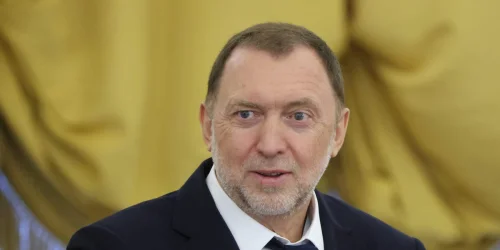
Russian industrialist Oleg Deripaska has proposed that Russians should work 12-hour days, six days a week, to help the country's economy adjust to a fundamental global shift. The billionaire founder of aluminium giant Rusal made the comments in a Telegram post on Monday, framing Russia's economic challenges as a profound transformation rather than a standard cyclical downturn.
Deripaska argued that the nation must tap into its "national characteristic" of pulling together in difficult times. "The sooner we switch to this new schedule — from 8 a.m. to 8 p.m., including Saturdays — the faster we will complete this transformation," he wrote.
A 'Deeper' Crisis
In his post, Deripaska dismissed the notion that Russia's slowing economy is driven by typical factors like interest rates or monetary policy. "This crisis is deeper," he stated. "It is caused by a difficult transformation: from the global opportunities we once had to regional ones, with all sorts of restrictions."
His call for longer working hours is aimed at accelerating this adjustment to new global conditions, which have been reshaped by geopolitical tensions and sweeping international sanctions.
Economic Context and Contradictions
Deripaska's proposal comes despite Russia benefiting from a surge in global oil prices, with benchmark crude futures trading above $100 per barrel – a more than 70% increase this year. Disruptions in the Middle East, including to tanker traffic through the critical Strait of Hormuz, have jolted markets.
However, official estimates show Russia's economic growth slowed sharply to 1% in 2025, down from 4.3% in 2024. Oil and gas revenues have historically accounted for over a third of the federal budget, which remains under pressure from sanctions.
Wider Geopolitical Pressures
The industrialist had warned earlier in the month that the ongoing conflict in the Middle East could still weigh on global and Russian growth, despite higher energy prices. His latest comments highlight a concern that high commodity revenues may not be sufficient to offset broader structural challenges.
The changing trade flows, including a limited US sanctions waiver on some Russian shipments, continue to force a recalibration of the country's economic model away from its previous global integration.
Deripaska's suggestion underscores the significant adaptation Russian officials and business leaders believe is necessary as the country navigates a prolonged period of economic reorientation, with the workforce potentially bearing a direct cost.