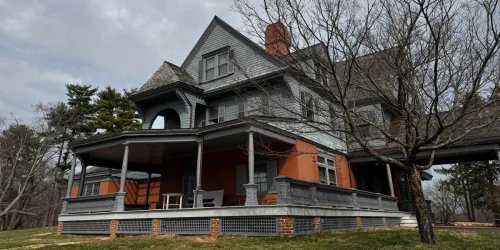
The Sagamore Hill National Historic Site in Oyster Bay, New York, preserves the home and legacy of the 26th president, Theodore Roosevelt. The estate, built in 1884 during the Gilded Age, served as his primary residence and was nicknamed the "Summer White House" during his presidency from 1901 to 1909.
Roosevelt's inauguration in 1901, following the assassination of William McKinley, marked a pivotal turn in American history. His administration is credited with steering the United States away from laissez-faire business traditions and toward the reforms of the Progressive Era.
A Historic Home and Expansive Grounds
The historic site encompasses Roosevelt's 23-room Victorian home, the Old Orchard Museum (housed in his son's former residence), a nature trail, a pet cemetery, and acres of surrounding land. While entry to the park grounds is free, guided tours of the main house are available for a fee of $15.
The interior of the home remains furnished as it was during Roosevelt's time, filled with hunting trophies, books, and personal artifacts that reflect his robust personality and varied interests. The property offers a direct physical connection to the domestic life of one of America's most consequential leaders.
From Gilded Age to Progressive Legacy
The construction of Sagamore Hill in 1884 places it squarely in the period of rapid industrialisation and vast economic inequality known as the Gilded Age. Roosevelt's subsequent political career, however, was defined by challenging the excesses of that era.
As president, he became known as a "trust buster" for his aggressive use of antitrust laws to break up large corporate monopolies. He also championed significant conservation efforts, establishing national parks, forests, and monuments to protect America's natural resources from uncontrolled exploitation.
Visitor Experience and Lasting Significance
Visitors to the site can explore the museum, which details Roosevelt's life and political achievements, walk the nature trails he enjoyed, and visit the nearby beach. The estate provides context not only for Roosevelt's personal story but also for the broader political transition his presidency represented.
The site is maintained by the National Park Service, ensuring the preservation of this key landmark for future generations. It stands as a testament to the era when the United States began to redefine the relationship between government, business, and the natural environment.