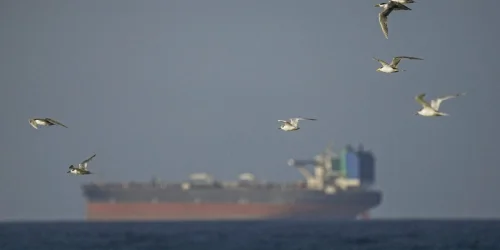
The two-week ceasefire between the United States and Iran has failed to restore normal shipping traffic through the Strait of Hormuz, one of the world's most critical maritime oil chokepoints. According to an April 8 report from maritime intelligence firm Windward, the strait remains largely stalled, with transit conditions and legal frameworks still undefined.
Vessels are still required to coordinate their passage with Iranian armed forces, and movements are dominated by smaller, risk-tolerant operators. Major global shipping firms and oil companies remain absent due to ongoing insurance and war-risk coverage constraints.
Traffic at a Standstill
On Tuesday, April 7—the day before the ceasefire was announced—only 11 vessels transited the strait, according to Windward's data. This figure is far below the more than 100 ships that typically passed through daily before the recent conflict. Activity on Wednesday showed little improvement, with just five bulk carriers tracked moving outbound by midday, all confined to a corridor controlled by Iran's Islamic Revolutionary Guard Corps.
"The strait has not reopened — it is in a supervised pause," Windward stated in its report. The firm added that Iran has confirmed the coordination requirement operates "within technical limitations," which remain unspecified, suggesting the Islamic Republic seeks to retain leverage over the waterway during negotiations.
Insurance and Risk Block Return to Normality
The continued paralysis is largely due to unresolved insurance issues. War-risk coverage constraints continue to prevent mainstream shipping from resuming operations. Around 3,200 vessels carrying roughly 20,000 seafarers remain parked west of the Strait of Hormuz as operators assess the risks.
"My sense is that it's unlikely ships will move quickly — much as there is a lot of pent-up demand to get these cargoes moving, risks will need to be managed carefully given the lives and costs in play," said Ellen Fraser, an energy analyst and partner at global consultancy Baringa.
Long Road to Recovery and Market Impact
Windward analysts warn that even in a best-case scenario, it could take weeks to move stranded oil and gas cargoes and months for global trade to reach pre-crisis levels. In the meantime, Fraser expects oil prices to remain elevated.
Crude futures rose in early trading on Thursday, April 9, after a sharp sell-off triggered by the ceasefire news. Brent crude futures were trading around $97 per barrel, while US West Texas Intermediate futures climbed to approximately $97.53 per barrel. Both benchmarks remain well above pre-war levels of around $70 a barrel, reflecting the ongoing supply disruption and market uncertainty.