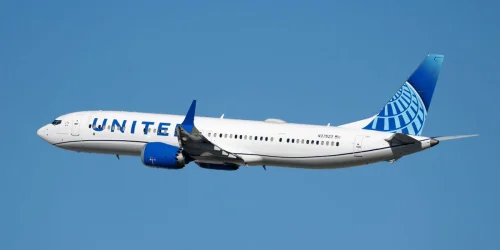
Imagine you're cruising at 35,000 feet when a strange, insistent beeping starts echoing through the cockpit. For the pilots of United Flight 2092, this wasn't a drill—it was the terrifying prelude to declaring a potential bomb on board. This is the inside story of the moment a routine trip from Chicago to New York became a high-stakes emergency.
The Boeing 737 Max was halfway to its destination when it abruptly changed course. Data shows it veered sharply south, racing towards Pittsburgh instead. In a tense audio recording, a pilot's voice cuts through the radio static to air traffic control, laying bare the chilling reality unfolding in the air. "We got an issue up here," he reports. "We're getting a sequential beeping... We're gonna have to start treating this as a potential bomb."
The Unanswered Question That Haunts the Investigation
What followed was a textbook security response born from worst-case scenario planning. The FBI's Pittsburgh office confirmed all passengers and crew safely evacuated the aircraft upon landing. Bomb technicians and local authorities, including a police K9 unit, swept the plane. The result? "Negative results." No explosive was found.
But that resolution leaves a gaping, unsettling hole in the story. United Airlines confirmed the diversion was due to a "potential security concern," yet the source of that ominous, one-second-interval beeping remains a complete mystery. The Federal Aviation Administration has yet to comment, deepening the intrigue around what could cause such a critical alarm.
From Panic to a Delayed Takeoff: The Passenger's Ordeal
For the travellers, the scare was far from over after the all-clear. Their journey became a marathon of uncertainty. United arranged a different aircraft—another Boeing 737—to finally complete the trip to New York's LaGuardia Airport. They departed over four hours later, landing a staggering 6.5 hours behind schedule. The original, now-cleared plane didn't leave Pittsburgh until nearly 11 p.m. the following night, finally returning to its home base in Chicago.
While this incident ended without physical harm, it echoes a pattern of high-altitude alerts that test protocol and nerve. Just last February, an American Airlines flight from New York to Delhi was escorted by Italian fighter jets to Rome over a "possible security concern" later deemed "non-credible."
These events reveal the fragile balance of modern air travel. A single unexplained sound, a sensor glitch, or an unknown anomaly can trigger a chain reaction involving federal agencies, international protocols, and hundreds of lives. The system worked to protect everyone on Flight 2092, but the lingering mystery of the beep serves as a stark reminder of the tensions that fly with us, unseen, on every journey.