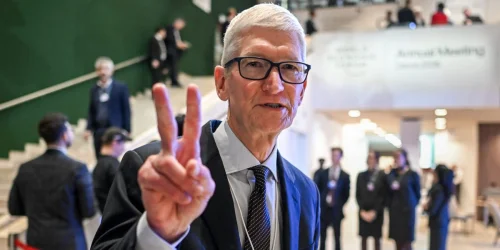
Imagine being told you must replace a visionary so iconic, his very name is synonymous with genius. That was the terrifying reality for Tim Cook in 2011. How do you follow a legend without being crushed by their shadow?
The answer lies in a single, powerful piece of advice from Steve Jobs himself. It was a gift that allowed Cook to stop asking "What would Steve do?" and start building the most valuable company on Earth.
The One Sentence That Changed Everything
When Jobs informed Cook he would be Apple's next CEO, his counsel was devastatingly simple: **"Never ask what I would do. Just do the right thing."**
Jobs had seen the creative paralysis that gripped Disney after Walt Disney's death. He was determined Apple would not suffer the same fate. For Cook, this was liberation. "I'll never forget that," Cook recalled. "He took off of my shoulder this question of 'What would Steve do?'"
From "What Would Steve Do?" to "This Is What Tim Does"
Freed from imitation, Cook applied his own formidable skills. Where Jobs was the product-obsessed innovator, Cook became the operational mastermind.
He restructured Apple to be **"more democratic,"** shifting from a one-man decision engine to collaborative teams. He doubled down on a ruthless supply chain and exploded Apple's presence in China, making the iPhone ubiquitous. His genius, as one investor notes, was in **"building the most efficient supply chain on the planet."**
The results are almost incomprehensible. Under Cook, Apple's market value soared from around £280 billion to over **£3.1 trillion**. He grew services like Apple Music and iCloud into a £80 billion-a-year behemoth and created entirely new product categories with the AirPods and Apple Watch.
The "Method Over Magic" That Quadrupled Profits
Cook's reign has been described as **"method over magic."** He safeguarded Jobs' core philosophy—focus, collaboration, and "insanely great" execution—while steering the company to unprecedented commercial heights. Annual net income rocketed to over £80 billion.
Yet, it wasn't without critique. Some argue Apple's reputation for earth-shattering innovation has dimmed, pointing to niche products like the Vision Pro headset. But Cook's success proves a powerful lesson: **effective succession isn't about cloning your predecessor, but courageously applying your own strengths.**
As Cook now prepares to hand over to hardware chief John Ternus, his legacy is secure. He didn't try to be Steve Jobs. By following that one crucial instruction, he became Tim Cook—and in doing so, he made Apple bigger than anyone, perhaps even Jobs, ever dreamed possible.