Imagine the company that holds the entire global tech industry in its hands deciding, in the middle of an AI boom, that it has too many bosses. That is the stark reality now facing thousands at ASML, the secretive Dutch giant without which your smartphone, laptop, and the servers powering the AI revolution simply could not be made.
Internal documents, obtained by Business Insider, lay bare a radical corporate flattening. They show a sweeping list of management positions—from department managers to group leaders—marked for extinction. This isn't just a reorganisation; it's a fundamental rewiring of how Europe's most valuable company operates, driven by complaints that it had become sluggish and inefficient.
The Roles on the Chopping Block
In a February presentation to staff, ASML outlined the management roles that will **cease to exist**. The hit list includes department managers, group leaders, and chief product owners. Even senior technical "architect" roles are being reduced and given stricter mandates. The goal? To cut through the bureaucracy and refocus on pure engineering.
This comes after January's announcement of 1,700 job cuts. But the leaked plans reveal the human architecture of those cuts: a deliberate dismantling of middle management layers. Why would a company at the peak of its power do this?
"We Realise the Consequences": The CEO's Admission
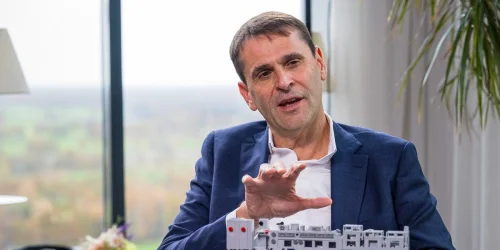
In a letter to employees, CEO Christophe Fouquet directly addressed the anxiety rippling through the workforce. He acknowledged staff concerns about the "consequences" of this brutal transformation. His solution? A promise to create around 1,400 new engineering roles from the ashes of the managerial purge.
"We realise that we will continue to grow at a fast pace and will need people on the operations side to help us achieve that growth," Fouquet wrote. It's a classic corporate squeeze: out with the managers, in with the engineers, all while the company's $400 million machines are in unprecedented demand.
Walkouts, Freezes, and a Shrinking US Impact
The human reaction has been swift and angry. Over 1,000 employees staged a walkout at the Dutch headquarters last month, with unions calling for another during this week's shareholder meeting. The company is now in tense negotiations with worker representatives.
Other documents show a six-week summer hiring freeze is planned. In a slight concession, the number of US roles affected has been reduced from 300 to 185. An ASML spokesperson stressed the plans are not final and that the company is trying to "reduce the period of uncertainty for people."
Why This Matters for Your Tech Future
ASML isn't just any company. It holds a global monopoly on the extreme ultraviolet lithography machines essential for making advanced chips. Every major player—TSMC, Intel, Samsung—depends on them. If this internal turmoil slows innovation or delivery, the ripple effects could delay everything from next-generation iPhones to the AI data centers of tomorrow.
ASML is now following the same path blazed by Microsoft, Amazon, and Meta: betting that a leaner, manager-light structure is the key to staying ahead. The gamble is enormous. The company is betting its future dominance on the idea that fewer bosses will mean more brilliant machines. For the employees whose roles are vanishing, and for a world addicted to faster chips, the stakes could not be higher.