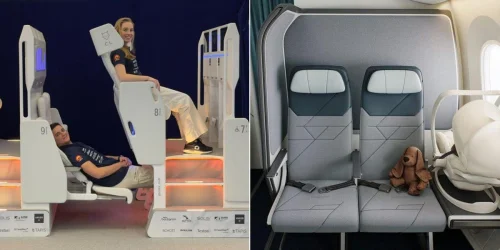
Imagine settling into your economy seat and finding not a cramped upright chair, but a semi-private pod with a table, or a double-decker lounger where you can stretch out almost fully. This isn't a distant dream for the ultra-wealthy—it's the radical future two seatmakers are racing to build for your next flight.
At the industry's biggest showcase last week, a giant US aerospace firm and a plucky Spanish startup unveiled concepts that could shatter everything you think you know about flying in the back of the plane. They're not just tweaking the padding; they're completely reimagining the space to give you business-class comfort without the business-class ticket.
The "Living Room Lounger" That Went Viral
Chaise Lounge's "Comfort Cabin" turns the cabin on its head—literally. By removing overhead bins and arranging seats at alternating heights, the design creates a stunning amount of legroom. Passengers on the lower level can recline deeply, with their feet stretching under the seat in front, while those above enjoy no one reclining into their space.
"It uses vertical space to give everyone more room," founder Alejandro Núñez Vicente told Business Insider, emphasising it does not "stack" passengers. He claims the row spacing is identical to today's premium economy, offering a "highly distinct, improved passenger experience" that has already drawn serious airline interest.
The Secret "Retreat" Hiding in the Worst Row on the Plane
Meanwhile, Collins Aerospace—a major supplier to global airlines—has targeted the most hated spot on widebody jets: the dreaded last row. Known for limited recline and zero privacy near the lavatory queue, it's being transformed into a "semi-private retreat" called SkyNook.
The winning design, which just bagged a top industry award, adds a sliding privacy partition and a clever table in the dead space by the wall. This table isn't just for your laptop; Collins showed it could securely hold a baby car seat during all flight phases, opening up new possibilities for families and pet owners desperate for more room.
A Collins spokesperson revealed this game-changer will be certified in months and flying with a launch customer by year's end.
But Can You Handle the Truth About Your Legroom?
These innovations come with trade-offs. The Comfort Cabin's major hurdle is passenger psychology: the potential for claustrophobia and the lack of overhead storage, meaning more checked bags. Núñez Vicente acknowledges the questions but insists testing shows most people loved the business-class-like privacy the separation provides.
The relentless push for better economy seats highlights a brutal truth for airlines: every square inch is sacred revenue. These designs aren't about generosity; they're a strategic play to create new, monetisable premium experiences within the rigid economy footprint. Your comfort, it seems, is the next frontier for profit.
One thing is certain: the race to reinvent the coach cabin is accelerating. The days of passively accepting your cramped fate may be numbered, as seatmakers bet big on your willingness to embrace a radically different—and potentially far more comfortable—way to fly.