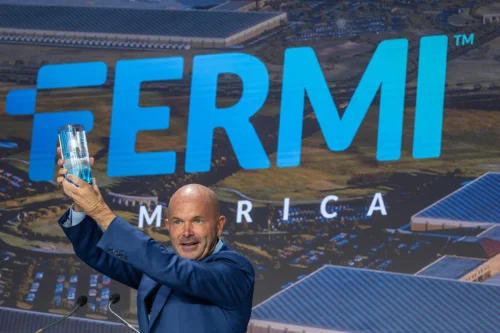
Imagine building the future of energy, only to see the architects of your vision walk out the door overnight. That's the stark reality now facing Fermi, the AI nuclear power startup, after its co-founder and CEO Toby Neugebauer and CFO Miles Everson suddenly departed, sending shares into a 22% nosedive.
Why now? And what does this mean for the ambitious plan to power data centres with nuclear reactors in Texas? The official statements are calm, but the underlying story reveals a company at a critical crossroads.
The Boardroom Reshuffle No One Saw Coming
In a move that stunned investors, Fermi announced that Neugebauer has stepped down as chairman, though he remains on the board. Stepping into the chairman's role is Lead Independent Board Director Marius Haas. Meanwhile, Everson's departure was framed as an "election to the board," a result of rights held by a family trust.
This isn't just a routine change. It's a fundamental shift in power at the top of a company founded by former U.S. Energy Secretary Rick Perry. The question everyone is asking: was this a planned succession or a sign of deeper trouble?
Project Matador: The Multi-Billion Pound Gamble Now in Jeopardy
At the heart of Fermi's turmoil is "Project Matador," its flagship AI campus in Amarillo, Texas. The vision is audacious: use advanced nuclear reactors to fuel the immense power needs of AI data centres. But Bloomberg has reported recent "friction with a key customer" and other struggles plaguing the project for months.
These aren't minor hiccups. They are the kind of delays and disputes that can sink a capital-intensive project before it ever generates a watt of power. The sudden loss of its CEO and CFO throws massive uncertainty over its future timeline and financing.
Fermi 2.0: A Rebrand or a Last-Ditch Lifeline?
In response to the crisis, the company is launching what it calls "Fermi 2.0." This rebranding effort bundles the leadership changes with plans for a new corporate headquarters in Dallas, desperately trying to signal stability and progress to nervous shareholders.
But can a new name and a change of address solve the fundamental challenges? Translating a groundbreaking idea into a functioning, profitable power plant is a marathon, not a sprint. The departure of its top executives in the middle of this race suggests the internal map might have been torn up.
What This Means for the Future of AI and Energy
The stakes here extend far beyond one company's stock price. Fermi's promise was a solution to one of the biggest bottlenecks in the AI revolution: an enormous, reliable, and clean power supply. If Project Matador falters, it doesn't just hurt investors; it delays a potential breakthrough for the entire tech industry's energy crisis.
The coming months will reveal if Fermi 2.0 is a genuine new chapter or merely the prelude to a more dramatic finale. One thing is certain: the race to power AI with the atom just got a lot more unpredictable.