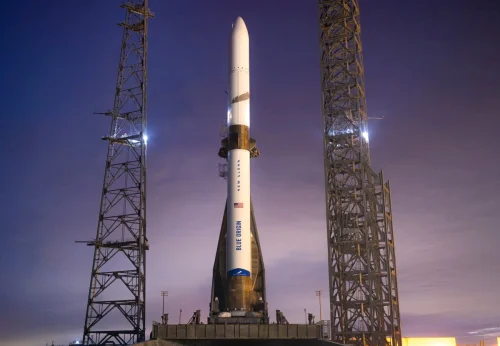
Imagine the scene: a massive new rocket, its booster landing perfectly for the first time, a historic moment for a company desperate to catch up to SpaceX. Then, silence. A satellite is lost, placed in a death orbit. This isn't just a failed launch; it's a potential crisis for America's space ambitions.
What went wrong with Blue Origin's New Glenn on Sunday? And why does this single mishap threaten to delay everything from global internet projects to the planned return of humans to the Moon?
A "Lower Than Planned" Orbit Means a Multi-Million Pound Loss
The primary mission was to deliver a communications satellite for AST SpaceMobile. While the launch started well, with the booster's successful re-use and landing, the upper stage apparently failed after separation. The result was catastrophic for the customer.
AST SpaceMobile confirmed the satellite was in such a low orbit it is now a **total loss**, destined to burn up in the atmosphere. The company's stock plummeted over 10% on the news, though it stated insurance would cover the cost and it has other satellites nearly ready to fly.
But for Blue Origin, the financial fallout from a disappointed customer is just the beginning.
Grounded: The FAA Investigation That Halts Everything
According to the Orlando Sentinel, the Federal Aviation Administration has now ordered Blue Origin to conduct a full investigation. **This mandate grounds the New Glenn rocket entirely** until the probe is complete.
This grounding throws a massive wrench into the company's aggressive launch schedule. Blue Origin had hoped to fly up to 12 more missions this year. Every day the rocket is grounded is a day its competitors, namely the dominant SpaceX, pull further ahead.
And the stakes are far higher than commercial satellite deliveries.
How One Failure Puts the Moon and National Security on Hold
Blue Origin isn't just a launch provider; it's a key contractor for NASA's Artemis programme, working on a critical lunar lander meant to return astronauts to the Moon. Any significant delay in proving New Glenn's reliability risks cascading into those flagship national projects.
Simultaneously, the company is in the delicate process of getting New Glenn certified by the U.S. Space Force to fly sensitive national security missions. A high-profile failure and subsequent grounding is the last thing you want when trying to convince the military your rocket is trustworthy.
This single mishap has therefore created a perfect storm, threatening Blue Origin's commercial, civil, and military future all at once.
The coming weeks of investigation will be crucial. Blue Origin must not only find and fix the flaw but rebuild confidence with customers, NASA, and the Pentagon. In the fierce new space race, **time is the one thing you can't afford to lose**.