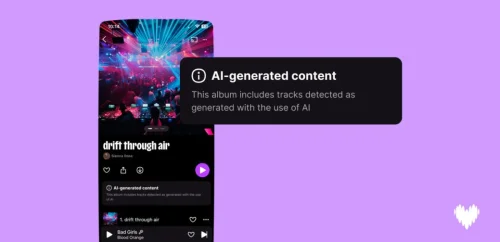
Imagine a world where nearly half of all new songs are created not in a studio, but by an algorithm. That world is here. Right now, on one of the world's biggest music platforms, a silent revolution is underway, and it's threatening to drown out human creativity.
Deezer has just dropped a bombshell: a staggering 44% of all new tracks uploaded to its service every single day are AI-generated. We're talking about almost 75,000 synthetic songs daily. But here's the twist you need to know: while this digital deluge is immense, its impact on what you actually listen to is being fiercely contained behind the scenes. So, what's really going on?
From a Trickle to a Tsunami: The Unstoppable Rise of the AI Hit Factory
The numbers tell a story of explosive, unchecked growth. Back in January 2025, Deezer saw just 10,000 AI tracks a day. Fast forward to today, and that figure has multiplied by seven and a half. Month by month, the surge has been relentless: 30,000 by September, 50,000 by November, 60,000 this past January. This isn't a trend; it's a fundamental shift in how music is being produced.
"AI-generated music is now far from a marginal phenomenon," warns Deezer CEO Alexis Lanternier, sounding the alarm for the entire industry. He insists action is needed "to help safeguard artists’ rights and promote transparency for fans."
The Great AI Purge: Where Do All Those Millions of Songs Actually Go?
Here's the part the algorithms don't want you to see. Despite the overwhelming upload numbers, AI music accounts for a mere 1-3% of total streams. Even more revealing? Deezer detects that a massive 85% of those streams are fraudulent and demonetises them.
The platform has declared war on this synthetic surge. Any song tagged as AI-generated is instantly banished—removed from algorithmic recommendations and editorial playlists. In its latest move, Deezer announced it will no longer even store high-resolution versions of these tracks. It's a clear message: this content is being quarantined.
Can You Even Tell the Difference? The Chilling Result of a Global Test
This raises a terrifying question for music lovers. If this stuff is flooding the gates, can your ear tell what's real? According to a Deezer survey, 97% of people couldn't distinguish between a fully AI-generated song and one made by humans. The line is blurring beyond recognition.
Yet, the public's conscience is clear. An overwhelming 80% believe AI music should be clearly labelled, and 52% say it has no place in the main charts alongside human artistry. This disconnect—between what's being made and what audiences want—is the heart of the crisis.
Your Playlist, Your Charts, and the Fight for Music's Soul
The stakes couldn't be higher. Just last week, an AI-generated track topped the iTunes charts in five major countries, proving synthetic hits can break through. While Deezer and others, like Qobuz, are building walls with detection tools, giants like Spotify and Apple Music are taking different, often less transparent, approaches.
This is more than a tech story. It's a battle for the future of culture. As you scroll through your release radar or browse the charts, an invisible war is being waged over what gets heard, who gets paid, and whether the heart and soul of human creation can survive the age of the machine.