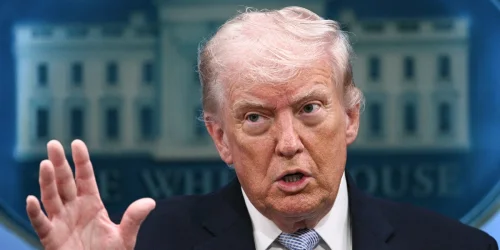
Former US President Donald Trump has announced a conditional two-week suspension of military action against Iran. The agreement, brokered following urgent requests from Pakistani leadership, hinges on Iran immediately reopening the strategically vital Strait of Hormuz.
The announcement was made via Trump's Truth Social platform on Tuesday evening, just hours before a previously set 8 p.m. E.T. deadline for Iran to act. Trump stated the move was "subject to the Islamic Republic of Iran agreeing to the COMPLETE, IMMEDIATE, and SAFE OPENING of the Strait."
Market Reaction and Escalating Threats
Financial markets responded positively to the news. The Dow Jones Industrial Average rose several hundred points following Trump's post, having already begun trending upward in anticipation of a potential deal.
The announcement followed a day of heightened rhetoric. Earlier on Tuesday, Trump had warned on Truth Social that "a whole civilization will die tonight, never to be brought back again" if Iran did not comply by the deadline. This came after Iran rejected US proposals and Trump, in turn, dismissed a 10-point plan from Tehran on Monday.
The Stakes: A Choked Global Artery
The core of the crisis is Iran's blockade of the Strait of Hormuz. This narrow sea passage is a critical chokepoint for approximately 20% of the world's total oil supply. The disruption has had a direct impact on consumers, pushing the national average price for a gallon of petrol in the United States above $4 as of April 7, according to data from the American Automobile Association (AAA).
Diplomatic Push from Pakistan
The breakthrough followed direct intervention from Pakistan. On Tuesday afternoon, Pakistani Prime Minister Shehbaz Sharif publicly asked Trump for a two-week extension of his ultimatum. In a parallel appeal on social media platform X, Sharif also urged Iran's leaders to open the strait for two weeks "as a goodwill gesture."
"We also urge all warring parties to observe a ceasefire everywhere for two weeks to allow diplomacy to achieve conclusive termination of war, in the interest of long-term peace and stability in the region," Sharif stated in his post.
Trump cited these conversations with Prime Minister Sharif and Pakistan's Field Marshal Asim Munir as the catalyst for the pause.
Next Steps and Uncertain Future
The two-week window establishes a temporary de-escalation but leaves the fundamental conflict unresolved. The ceasefire is explicitly intended to "clear the way for negotiations to end the war." Whether substantive talks can commence within this short timeframe, and if Iran will fulfil its part by reopening the Strait, remains the immediate test for this fragile diplomatic arrangement.