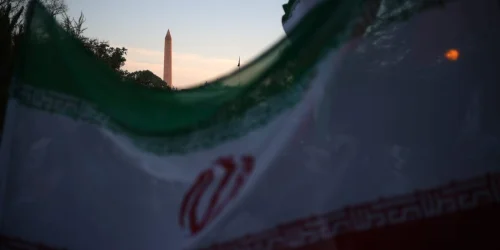
US President Donald Trump announced a two-week ceasefire deal with Iran on Tuesday, extending negotiations to end the conflict if Tehran agreed to reopen the Strait of Hormuz. The last-minute deal was reached shortly before an 8 p.m. ET deadline, averting a threatened escalation.
The Strait of Hormuz is a critical waterway between Iran and Oman, through which a significant portion of the world's oil and gas shipments pass. The deal stipulates that Iran has signalled safe passage through the strait for the two-week period.
Analysts Question Long-Term Prospects
Initial reactions from analysts and former officials suggest scepticism about the deal's durability. Charles Bishop, head of global policy research at Signum Global Advisors, stated in a research note that the firm's "basecase remains that President Trump is likely biding his time before a larger offensive, rather than 'genuinely' agreeing to end the war on Iran's terms."
Bishop suggested the move was more likely aimed at de-escalating the conflict and calming volatile markets, rather than accepting Iran having long-term control over the strait. "Whether this proves to have been the case will determine whether today marks the beginning of the end for the war, or a mere delay in further escalation ahead," he wrote.
Immediate Impact on Energy Markets
The announcement triggered an immediate reaction in energy markets. Patrick De Haan, head of petroleum analysis at GasBuddy, posted on Bluesky that "oil prices [are] dropping significantly," which could lead to petrol price increases fading within 48 hours before decreases begin.
De Haan projected that the national average price for petrol in the US could fall below $4 per gallon in approximately one to two weeks, while diesel prices may take six to eight weeks to drop below $5. He cautioned that the "coming days will see volatility" as negotiations continue.
Former Official Highlights Key Obstacle
Joe Kent, the former director of the US National Counterterrorism Center who resigned in March over his opposition to the war, outlined a major hurdle for the ceasefire. In a video statement, he said it is "absolutely critical" that the US removes its offensive military support from Israel to prevent strikes on Iran that could violate the deal.
Kent argued that US military action has so far destabilised the region and strengthened the Iranian government. "We have to understand that there is no military solution to the conflict right now," he said, adding that Israel's objective of toppling Iran's government "works against" US peace efforts.
The White House has not yet detailed the next steps following the initial two-week period. The deal marks a pivotal moment in a conflict that has produced the largest supply shock to the global oil market in history, sending fuel prices soaring worldwide.