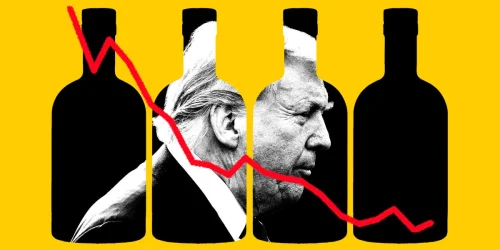
American alcohol consumption has fallen to its lowest level in decades, with a 5% volume decline recorded in 2025, according to data from the drinks analytics firm IWSR. The broader global market also contracted by 2%. Industry experts and economic analysts directly link this significant downturn to a combination of economic pressures and policy decisions emanating from the Trump administration.
Marten Lodewijks, President and Managing Director of IWSR, described the situation as "death by a thousand cuts," suggesting that multiple, cumulative factors are responsible for the industry's woes. "It just so happens that the president of the United States is the one holding the knife," he stated, highlighting the political dimension of the economic trends.
Economic Squeeze Deters Discretionary Spending
The primary driver is a severe affordability crisis impacting American households. Despite presidential claims of a "roaring" economy, data shows consumer sentiment at a record low. Key pressures include a 25% rise in prices since 2020, reaccelerating inflation, gas prices exceeding $4 per gallon due to the Iran conflict, and resuming student loan payments.
"We are seeing the pressure on affordability escalate," said Nadine Sarwat, a beverages and cannabis analyst at Bernstein. She notes this cycle is unique: instead of trading down to cheaper brands, consumers are sticking with preferred premium labels but buying smaller pack sizes to manage cash outlay, or opting for ready-to-drink cocktails.
Policy Impacts: Tariffs and Immigration Enforcement
Trump administration policies have created specific headwinds. Persistent aluminum tariffs have significantly raised costs for brewers, with some craft members seeing can price increases of 25-30% this year. "When energy prices go up, aluminum prices go up," explained Bart Watson, CEO of the Brewers Association, linking costs to Middle East instability.
Aggressive immigration enforcement has had a "chilling effect" on Hispanic consumers, a key beer-drinking demographic. Constellation Brands CEO William Newlands cited this cohort's cautious spending as a major challenge for its Corona and Modelo brands earlier this year. Consultant Dave Williams noted reduced foot traffic as Hispanic consumers "went to places they felt safe."
International Relations Compound Domestic Issues
The decline in international tourism, particularly from Canada, has hurt bars and breweries in border states and traditional "snowbird" destinations like Florida and California. Watson reported Canadian traffic "just not showing up," while Lodewijks noted a consumer boycott of US whiskey in Canada following antagonistic presidential rhetoric, with similar anecdotal reports from Germany and France.
A Glimmer of Regulatory Leniency
One administration action provided minor relief. The White House's latest dietary guidelines, released in January, offered only vague advice to "limit" alcohol intake. Dr. Mehmet Oz, administrator for the Centers for Medicare and Medicaid Services, went further, calling alcohol a "social lubricant" and implying moderate consumption was acceptable. Consultant Dave Williams assessed this messaging "didn't make it any worse than it was in the mind of the consumer."
Looking ahead, the industry faces continued uncertainty. Election years typically dampen consumption, and the volatile geopolitical climate, with an escalating-deescalating conflict in Iran and global economic instability, provides little optimism for a near-term recovery. "The political situation remains very tumultuous," concluded Lodewijks, summarizing the environment suppressing America's alcohol market.