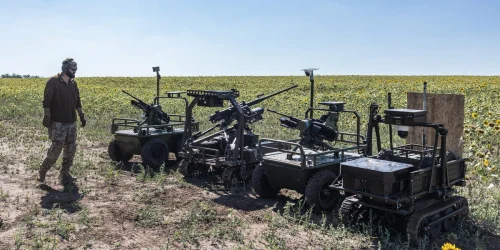
Imagine a battlefield where the most perilous jobs—carrying ammunition, evacuating the wounded, even storming enemy positions—are no longer done by soldiers. This isn't science fiction; it's the new reality on Ukraine's front lines. And it's about to scale up in a way that will fundamentally change how wars are fought.
In a stunning announcement, Defence Minister Mykhailo Fedorov revealed Ukraine will contract a staggering 25,000 new ground robots in just the first six months of this year. That's double last year's total. The ultimate goal? To have 100% of front-line logistics performed by robots, keeping vulnerable soldiers out of harm's way.
The Robots Saving More Than Just Supplies
President Volodymyr Zelenskyy shared a jaw-dropping statistic last week: these unmanned ground vehicles have carried out over 22,000 missions in just three months. "Lives were saved more than 22,000 times," he stated, "when a robot went into the most dangerous areas instead of a warrior."
This represents a meteoric rise in usage. In December, the commander-in-chief reported only 2,000 missions over the previous six months. By March, that figure had exploded to over 9,000 missions in a single month, showing how central these machines have become.
From Carrying Gear to Capturing Positions
The robots are evolving from pack mules to frontline combatants. Soldiers on the ground detail their immense impact. "One average-sized war robot can carry more than roughly 10 servicemen can," Oleksandr Yabchanka of the Da Vinci Wolves Battalion told Business Insider.
But they're doing far more than carrying gear. For the first time in this war, Ukraine used only unmanned platforms to successfully seize a Russian position. In other surreal moments, Ukrainian units have even reported Russian robots surrendering to them.
Why This Is a Game-Changer for a Smaller Force
For Ukraine, a nation that cannot afford to waste its precious manpower, these robots are a strategic lifeline. They perform the dangerous tasks that would otherwise cost lives, from laying mines to direct attacks. Fedorov calls it "one of the most dynamic areas of defence tech," with over 280 Ukrainian companies now working in the field.
The shift is toward mass, cheap, and effective systems—a lesson Western militaries are watching closely. To fuel this robotic army, Ukraine's defence procurement agency has already signed 19 contracts worth around $250 million, with new policies to speed up production and integration.
The message from Kyiv is clear: the future of warfare is here, and it is unmanned. As these 25,000 new machines roll out, they won't just be delivering supplies; they will be redefining the very calculus of battle, saving Ukrainian lives while presenting Russia with an ever-more automated and relentless opponent.