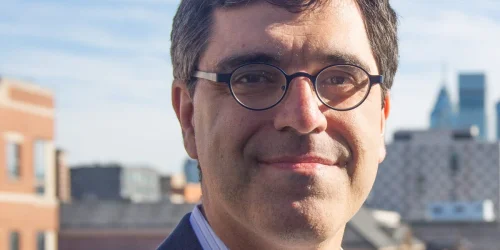
A University of Pennsylvania professor has used artificial intelligence to recreate and complete a graduate-level course in just 12 hours, highlighting a significant challenge to traditional university teaching models. Jesús Fernández-Villaverde, an economics professor at the institution, employed the AI chatbot Claude to design a personalised syllabus on the sociologist Erving Goffman, guide his study, and act as a discussion partner.
The process, which Fernández-Villaverde said delivered understanding comparable to a week-long master's module, involved three key stages. First, Claude generated a tailored curriculum based on his existing knowledge. Second, the professor read Goffman's key texts, including "The Presentation of Self in Everyday Life", with the AI structuring the order. Finally, he used the chatbot interactively to ask for clarifications and draw parallels to economics.
AI as a 'Knowledgeable Colleague'
Fernández-Villaverde described the experience as the difference between "reading a book alone and reading it alongside a knowledgeable colleague who has infinite patience and no office hours." He stated that Claude "excelled" at curating what to study and in what order, a task he rated as exceeding the 90th percentile of real professors for this specific purpose.
"The ability to learn at this level, at close to zero marginal cost, is extraordinary," the professor told Business Insider. He emphasised that the roughly 12 hours he invested matched the total student effort expected in a well-structured one-week course.
Limitations and Institutional Pressure
Despite its proficiency, the professor identified clear shortcomings in the AI's teaching capability. Claude "answers the questions you ask rather than the questions you should be asking," he said, noting it cannot challenge students like great teachers do or replicate the peer experience of a classroom. However, he argued the comparison should be with real, not ideal, professors.
The broader implication, according to Fernández-Villaverde, is economic. He warned that AI forces universities to justify their value, particularly those whose main proposition is transmitting existing knowledge in lectures. "If your main value proposition is transmitting existing knowledge in the classroom, and a student can get a comparable or better version of that for $20 a month, the business model is under severe pressure," he said.
Future of Higher Education
His concerns echo those of other academics, including University of Texas history professor Steven Mintz and economist Tyler Cowen, who say AI exposes weaknesses in standardised assignments and outdated teaching. Fernández-Villaverde does not believe AI will eliminate traditional higher education but will force a rethink.
He concluded that institutions offering research mentorship, laboratory access, genuine peer communities, and credible credentials will thrive. "The universities that will thrive are those that offer something AI cannot," he said. "The ones that are essentially selling access to lectures and a diploma will face the hardest questions."