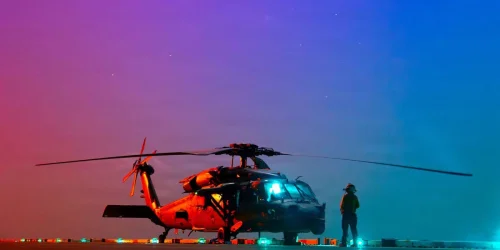
The United States and Iran are observing a two-week ceasefire after over a month of conflict, with US military leadership vowing to maintain a regional presence to ensure compliance. The halt in hostilities follows Operation Epic Fury, a sustained American military campaign that has resulted in the destruction of a significant portion of Iran's military infrastructure and the consumption of vast logistical resources by US forces.
Air Force General Dan Caine, Chairman of the Joint Chiefs of Staff, provided a detailed operational update on Wednesday. He confirmed that US forces struck more than 13,000 targets within Iran, including over 4,000 dynamic targets that emerged during the conflict. The campaign has devastated Iran's defence capabilities, with an estimated 80% of its air defence systems destroyed.
Scale of Destruction and Munitions Expenditure
The targets struck ranged from command and control nodes to nuclear facilities and defence industrial sites. General Caine reported the destruction of more than 2,000 command centres, over 155 naval vessels, and 95% of Iran's naval mines. The country's weapons manufacturing capacity was severely degraded, with 450 ballistic missile and 800 one-way attack drone storage facilities destroyed, including "every factory" producing Shahed drones.
Allied forces, including US and Gulf state units, intercepted approximately 1,700 ballistic missiles along with numerous drones. The conflict has also strained US munitions stockpiles, with an estimated more than 850 Tomahawk cruise missiles used—the highest number ever expended in a single campaign.
Logistical Footprint and Human Cost
The human and logistical scale of the American deployment was starkly outlined by General Caine. He stated that 50,000 US military personnel participated in the operation. Their support required over six million meals, 950,000 gallons of coffee, and two million energy drinks. "And a lot of nicotine," Caine added. "But I am not saying that we have a problem."
The operation resulted in 13 American service members killed and 365 wounded, with 315 of the injured having returned to duty. US asset losses included three crewed fighters to friendly fire, a refueling tanker in a crash, two aircraft to enemy fire, and multiple drones. The aircraft carrier USS Gerald R. Ford was forced into port for repairs following a severe onboard fire.
Regional Casualties and Financial Toll
Casualties in the region are significantly higher. Iran's health ministry reported over 2,000 killed and 20,000 wounded. The US-based human rights group HRANA estimates approximately 3,540 total deaths since the war began, including 1,665 civilians and at least 248 children. Thousands more are believed to have been killed across the Middle East.
Financial estimates of the conflict vary. Analysis from the Center for Strategic and International Studies indicates the first six days cost around $11.3 billion, rising to $16.5 billion by day 12. Although the daily cost has decreased, some projections suggest the total could reach $50 billion.
Ceasefire and Future Posture
With the ceasefire now in effect, US Defence Secretary Pete Hegseth confirmed American forces would remain in the region. "We'll be hanging around," Hegseth said on Wednesday. "We're gonna make sure Iran complies with this ceasefire and then ultimately comes to the table and makes a deal."
The US has assembled a substantial force in the Middle East, including bombers, fighter jets, electronic warfare assets, missile defence systems like Patriot and THAAD, and numerous naval vessels, to enforce the agreement and monitor future developments.