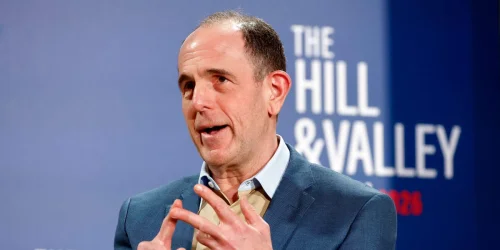
Keith Rabois, a prominent venture capitalist and former executive at PayPal and Square, has declared that the role of the product manager (PM) in technology companies is becoming obsolete due to the rapid advancement of artificial intelligence. Speaking on "Lenny's Podcast" on Sunday, the Khosla Ventures managing director stated that the PM role "makes no sense" in the near future.
Rabois argued that AI tools are evolving at such a pace that coordination-heavy roles and lengthy strategic planning—core functions of product managers—are no longer viable. He cited the capabilities of new AI startups like Lovable, Cursor, and Replit, which offer "vibe coding" tools allowing users to generate applications with simple prompts.
The End of the Roadmap
"The capabilities of foundation models or companies like Lovable, things like that, are just so improving at such a rapid rate that it makes no sense to have a yearlong roadmap," Rabois said during the podcast interview. He emphasised the speed of change, noting that "there are things that were impossible to do in November that are actually pretty easy to do right now in March."
In this environment, the classic PM functions of gathering customer requirements, aligning cross-functional teams, and planning long-term product strategy start to appear outdated. "I think intermediaries like conventional PMs don't make a lot of sense," Rabois concluded.
A New Required Skill Set
According to Rabois, the skill set required for product leadership is shifting dramatically. "The skill is more like being a CEO now, which is, what are we building and why?" he stated. He described the new critical trait as the "art of knowing what to build," as the technical ability to create products becomes increasingly democratised by AI tools.
"That trait is critical to be a successful designer because the tools and the ability to actually create the thing are going to be easier and easier. But the art is knowing what to build," he added.
Implications for Company Structure
Rabois's analysis suggests a fundamental rethink of how technology teams and companies are organised. He predicts that the most effective organisations will be those that can rapidly identify and act on new opportunities, moving away from layered coordination.
"The future of a very high-growth stellar startup will notice that something's now possible this week and create new features and new value for customers next week," Rabois said, outlining a vision of hyper-agile, real-time product development cycles made possible by AI.