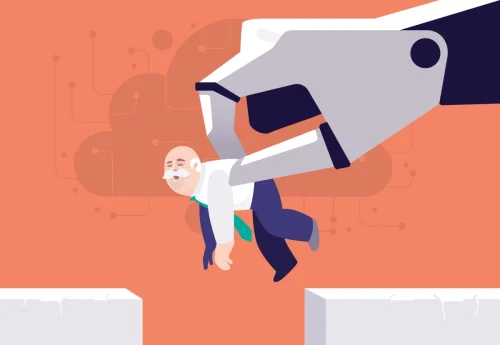
A significant minority of American workers are open to the idea of having an artificial intelligence program as their direct line manager, according to a new national poll. The survey, conducted by Quinnipiac University, indicates a shifting landscape in workplace attitudes towards automation and management.
The poll of 1,397 U.S. adults, carried out between 19 and 23 March 2026, found that 15% of respondents would be willing to work in a role where an AI assigned their tasks and set their schedules. This sentiment emerges as companies increasingly deploy AI tools to automate middle-management functions.
The 'Great Flattening' of Corporate Structures
This trend is part of a broader corporate movement some analysts term 'The Great Flattening', where AI replaces layers of traditional management. Major firms are already implementing such changes. Amazon has deployed new AI workflows that have replaced some middle-management responsibilities, leading to thousands of managerial layoffs.
Other examples include Workday, which has launched AI agents capable of filing and approving employee expense reports. In a notable case, engineers at Uber developed an AI model of CEO Dara Khosrowshahi to evaluate project pitches before meetings with the actual executive.
Widespread Anxiety Over Job Displacement
Despite this growing acceptance in some quarters, the Quinnipiac survey reveals deep-seated concerns about AI's impact on employment. A substantial 70% of all respondents believe advances in AI will decrease the number of job opportunities for people.
Among currently employed Americans, the anxiety is more personal: 30% expressed concern, being either "very" or "somewhat" worried that AI could make their specific role obsolete. This highlights a tension between the potential efficiency gains from AI management and fears over job security.
The Future of Fully Automated Companies
The poll data and corporate trends suggest a future where automation could extend beyond management. Industry observers speculate that we may soon see entire billion-dollar companies operated by a single individual, supported by fully automated employees and executive functions.
This shift represents a fundamental reimagining of organisational structure, moving away from human-led hierarchies towards AI-driven operational models. The long-term societal and economic implications of such a transition remain a key subject for further study and debate.