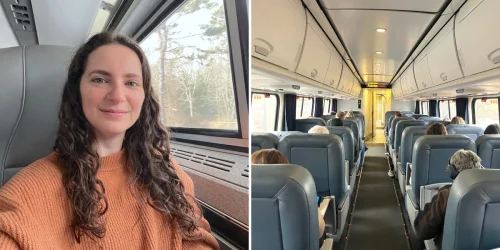
A direct comparison of Amtrak's coach and business class services on its busy Northeast corridor has revealed a significant disparity in comfort and convenience, particularly for longer journeys. The review, based on travel between New York City and Providence, Rhode Island, comes as Amtrak reports record ridership and revenue, with 34.5 million customer trips and $2.7 billion in adjusted ticket revenue in the 2025 fiscal year.
The national rail service is increasingly seen as a viable alternative amid air-travel disruptions, making the value proposition of its different service classes a key consideration for travelers.
Coach Class Presents Challenges with Seating and Comfort
On a Northeast Regional train, a $30 coach ticket offered an unassigned seat, leading to a stressful boarding process as passengers rushed to claim space. The reviewer, prone to motion sickness, was initially assigned a rear-facing seat, which can cause nausea for some travellers due to the disconnect between visual and vestibular cues.
After requesting a change, they secured a forward-facing aisle seat, but found both power outlets for the row were located by the window, requiring awkward access. Coach seats provide approximately 39 inches of legroom, and the uncovered overhead storage allowed personal items to spill into the aisle.
Business Class Delivers a Seamless, Premium Experience
In contrast, a $150 business class ticket on an Acela train—later increased to $213 due to a schedule change ahead of a winter storm—provided a reserved, forward-facing window seat selected at booking. Business class seats offer about 42 inches of legroom and are arranged with covered overhead bins, creating a more orderly cabin.
The Acela service also reduces travel time by approximately 45 minutes between Providence and New York City due to fewer stops. An Amtrak representative stated that "Business Class provides an enhanced level of comfort" and that on many Northeast routes, "seat selection is offered, providing a more seamless boarding experience."
Amenities and Dining Highlight the Class Divide
The disparity extends to onboard facilities. Business class bathrooms were notably more spacious, featuring a frosted window, compared to the airplane-style facilities in coach. While both classes feature a café car, business class on Acela offered upgraded sandwich options, such as cherrywood smoked ham and fontina on marble rye, for $12.50.
Some identical items carried a premium; a chicken Caesar salad cost $11.50 on the Northeast Regional but $15 on Acela. Business class passengers also benefit from complimentary non-alcoholic beverages, including a custom Acela Blend coffee by La Colombe.
Value Proposition Depends on Journey Length
The reviewer concluded that for a shorter trip, the cost savings of coach might be worthwhile, but for a journey of several hours, the guaranteed seat selection, extra space, and enhanced amenities made business class a justifiable splurge. The ability to pre-select a specific seat direction was cited as a critical advantage for comfort-sensitive travellers.
The comparison underscores the operational differences between Amtrak's service tiers as the rail network experiences unprecedented growth, positioning business class as the preferred option for passengers seeking a reliable and comfortable alternative to air travel on the Northeast corridor.