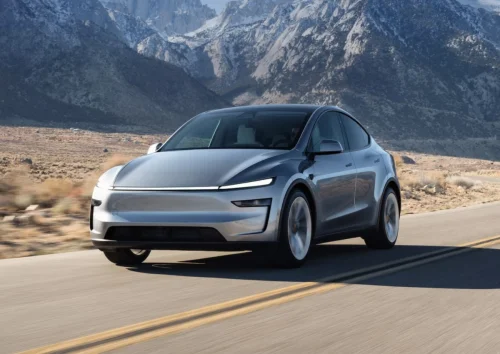
Tesla Inc. delivered 358,023 electric vehicles globally in the first quarter of 2026, the company announced on Thursday. The figure fell short of analyst expectations of approximately 368,000 units and represents a modest 6% increase from the same period in 2025, which was the company's worst quarter in years.
The results come despite the October 2025 launch of more affordable, stripped-down versions of its Model Y and Model 3, priced from $39,990 and $36,990 respectively. Tesla also reported a significant production surplus, having built 408,386 vehicles in Q1 2026, far more than it sold.
Struggle for Growth in a Cooling Market
The performance is stark for a company that once pledged 50% annual sales growth. It now risks a third consecutive year of declining overall sales, coinciding with a sharp drop in profitability. "The sales figures are striking for a company that once promised to grow EV sales 50% every year," the report notes, highlighting the scale of the challenge.
Tesla is not alone in its struggles. The broader electric vehicle market, particularly in the United States, has cooled. Legacy automakers have scaled back or cancelled ambitious EV plans, while newcomers also face headwinds. Rivian Automotive, for instance, reported shipping just over 10,000 vehicles in Q1 2026, a figure that has remained largely static.
Lack of New Mass-Market Product
A key factor in Tesla's stagnation is the absence of a new, high-volume model. CEO Elon Musk previously killed a project for a much lower-cost EV expected to be priced around $25,000, opting instead to focus resources on the autonomous "CyberCab" project. The cheaper Model Y and Model 3 variants were developed as substitutes.
The only new consumer model launched in recent years is the Cybertruck. While it outsells most other electric trucks, it has been a commercial disappointment relative to internal expectations. In Q1 2026, Tesla sold only 16,130 vehicles classified as "other models," a category that includes the Cybertruck and the discontinued Model S and Model X.
Future Prospects and Industry Context
Rivian, by contrast, is pinning its growth hopes on the imminent launch of its cheaper R2 SUV, though its most affordable version is not due until late 2027. Tesla currently has no equivalent new mass-market vehicle ready for release.
Analysts point out that Tesla's Q1 2025 figures were also impacted by planned factory shutdowns to retool equipment, suggesting the 6% year-on-year growth for Q1 2026 may not represent a substantial real improvement. The company's strategy now hinges on the success of its autonomous taxi venture and the continued, albeit slowing, demand for its existing lineup.