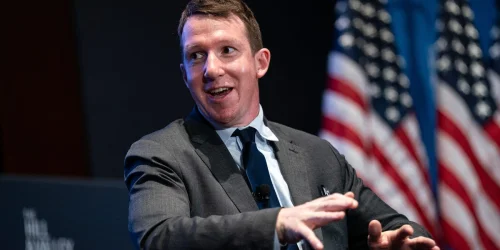
Jack Clark, a co-founder of the AI company Anthropic, has publicly championed the value of a liberal arts education for navigating the age of artificial intelligence. Speaking at Semafor's World Economy Summit on Monday, Clark, who studied literature at the University of East Anglia, argued that skills in historical understanding and narrative synthesis are "extremely relevant for AI."
He stated that the most important skill is learning "how to ask the right question" and having the intuition to collate insights from diverse disciplines. Clark's comments directly challenge the prevailing emphasis on purely technical degrees for careers in technology.
Synthesis Over Specialisation
Clark asserted that the most valuable areas of study are those involving "synthesis across a whole variety of subjects and analytical thinking." He believes majors fostering this cross-disciplinary approach will become increasingly important, rather than those focused on narrow technical proficiency.
This perspective is reflected in Anthropic's own hiring practices. The company employs philosophers, a discipline Clark highlighted by asking, "When was the last time you heard that a philosophy degree was like a great job prospect?"
Rote Programming "On the Way Out"
When pressed for specifics on what to avoid, Clark identified "rote programming" as a less valuable skill. This aligns with views from his colleagues at Anthropic, including Boris Cherny, creator of Claude Code.
Cherny has stated that the title of 'software engineer' will start to be phased out this year, signalling a shift in the industry's required skill set. Clark acknowledged that some people need to know programming fundamentals, but noted that "technology move[s] up the stack," reducing the centrality of basic coding.
Context and Future Implications
Clark's background as a former journalist informs his unique position within the AI industry's leadership. His advocacy suggests a growing recognition within tech firms that addressing AI's broad societal, ethical, and historical implications requires diverse intellectual frameworks.
The comments contribute to an ongoing debate about educational priorities and workforce preparation, positioning critical thinking and interdisciplinary synthesis as key assets for the future.