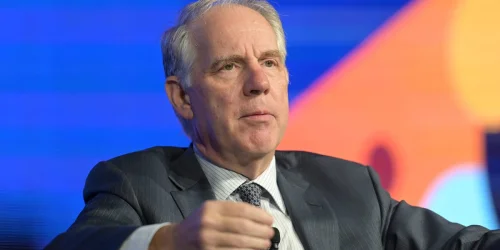
Jim Zelter, President of Apollo Global Management, has warned that the trillions of dollars being poured into artificial intelligence by technology companies may not deliver adequate returns for investors. Speaking on Goldman Sachs's "Exchanges" podcast published on Thursday, Zelter drew parallels to previous technological cycles, such as cell phones, acknowledging AI's utility but questioning its economic payoff.
"We've seen this many times in our last 30 years, whether it's cell phones or other technology uses. There's no doubt they're going to have a massive utility," Zelter stated. "But is the economic owner going to harvest the right returns for that investment?"
Massive Capex Cycle Reshapes Industry
The AI buildout is fundamentally altering the sector's economics. Zelter estimated that US data centers alone could require $5 trillion to $6 trillion in investment over the next five years. "There's a massive capex cycle going on that's turning an asset-light business into asset-heavy," he explained. This shift raises a critical question for shareholders regarding the ultimate financial returns on such enormous capital expenditure.
Investor Discipline Required
Zelter emphasised that the surge in AI spending represents a significant financing opportunity for firms like Apollo, but one that demands strict discipline. "Just because companies need capital, doesn't mean they're all great investments," he cautioned. He advised that investors must not treat equity-like risk as if it were safe, fixed-income exposure, stressing that higher-risk investments need commensurate compensation and lenders require strong downside protections.
Growing Skepticism on AI Hype
Zelter's comments add to a growing debate about potential over-exuberance in the AI sector. Other prominent investors have expressed similar concerns. In December, Howard Marks, cofounder of Oaktree Capital Management, said too many investors exhibit a "lottery-ticket mentality" towards AI. In February, veteran trader Steve Hanke told Business Insider that AI is "overhyped and potentially dangerous."
A recent KPMG US survey found that 75% of large-company CEOs believed generative AI may have been overhyped in the past year, even as many acknowledged its longer-term disruptive potential remains underappreciated. Despite this skepticism, nearly 80% of those CEOs plan to allocate at least 5% of their capital to AI initiatives this year.