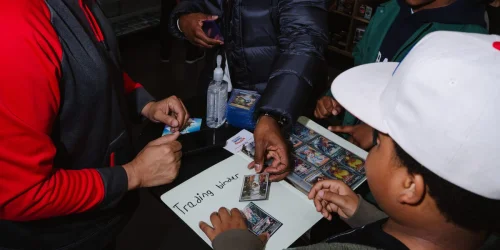
A new generation of investors is emerging not on Wall Street, but in hobby shops and school playgrounds, where children are building and trading portfolios of Pokémon cards. Treating the collectibles as a serious alternative asset, young traders are learning market fundamentals, negotiation, and financial literacy through the global trading card boom.
At Bleecker Trading in Manhattan, 13-year-old Mason told Business Insider he visits daily after school to wheel and deal. "I like making money a lot," he said. "I'm able to sell some cards for hundreds of dollars." His friend, Vincent, 13, echoed the sentiment, stating plainly: "It's an investment." This capitalistic approach is fuelled by a market that has seen the Pokémon brand become the world's No. 1 toy property in 2025, generating $2.5 billion in US sales—an 87% year-over-year increase according to Circana.
Beating Traditional Markets
The financial potential is significant. Data from Card Ladder shows its Pokémon index, tracking performance on platforms like eBay, grew 179% year-over-year, outperforming the S&P 500's 33% and the Dow's 22% growth. An average of $830,000 worth of cards are sold daily on the secondary market, with a single Pikachu Illustrator card fetching a record $16.5 million at auction in February. Shop owner Matthew Winkelried observes his school-age customers acting like "little business people" who diligently follow market trends.
The Modern Collector's Toolkit
Today's young collectors are savvy, leveraging technology and professional practices. They use apps and websites like Card Ladder and TCGplayer to check real-time values, store cards in protective sleeves and toploaders to preserve condition, and often send valuable finds to professional grading services like PSA. Liv, a seven-year-old in Stockholm, learned about proper storage and rarity factors from YouTube tutorials with her father after expressing interest in the trading, not playing, aspect of the game.
While many start with parental assistance—a few card packs or a special Elite Trainer Box costing $50-$70—some build self-sustaining portfolios. Winkelried cited a 12-year-old "Warren Buffett" of his shop who, within six months, mastered flipping cards for profit. His biggest win was pulling a super-rare "Moonbreon" card, getting it graded, and selling it for approximately $3,000, reinvesting most of the proceeds back into his collection.
Lessons in Economics and Risk
Parents and event organisers see tangible educational benefits. Samantha Veres, who runs children's events at Burbank Cards in Los Angeles, teaches kids about fair trading and asset care. Redell Armstrong, father of ten-year-old Jasper, uses Pokémon to convey financial literacy. "We use that as a platform for him to think intelligently about investments," Armstrong said. The hobby also teaches risk assessment; as Winkelried notes, unlike sports cards tied to athletes, "Charizard can't tear its ACL, it can't get pulled over for DUI."
However, the high-stakes environment carries risks. Jay Coscolluela, cofounder of West Coast Card Shows, recounted an incident where a dealer misled a 13-year-old about a card's value. While organisers often intervene, Coscolluela said such moments impart a harsh business lesson: "You can't go crying because you made a bad decision. That's called business." Parents like Rondell Fleming try to teach restraint, warning that the value-obsessed approach can lead to rapid spending.
A Bonding Experience with a Nostalgic Spark
The current craze was reignited in 2020 when quarantined millennials rediscovered their old collections, causing eBay sales to surge 574% between 2019 and 2020. Many parents, who collected in their youth, now bond with their children over the hobby. Despite some purists lamenting the capitalistic shift, the activity gets children socially engaged and off screens. At Bleecker Trading, dozens of kids talk, laugh, and trade, only pulling out phones to check card values. For Liv, the former Roblox enthusiast, the new obsession is clear: her upcoming birthday request is for more Pokémon cards.