What if the key to winning the AI race isn't a smarter chatbot, but a better gadget? That's the multi-billion-dollar gamble Apple just made with a single, seismic leadership change that puts hardware back in the driver's seat.
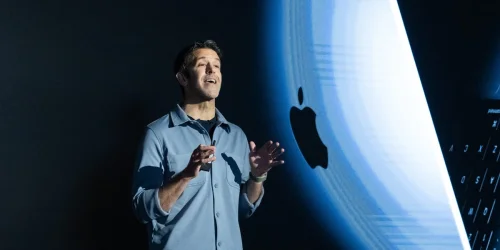
On Monday, the tech giant announced that Tim Cook will step down as CEO on September 1st. His successor isn't a software guru or an AI visionary. It's John Ternus, the company's senior vice president of hardware engineering.
This isn't just a routine handover. It's a loud, clear signal about where Apple believes the future lies—and it's all about the devices in your pocket, on your wrist, and perhaps soon, on your face.
Why a Hardware Boss is Now Calling the Shots
John Ternus, a 23-year Apple veteran, has been the mastermind behind the hardware you know. He oversaw the engineering of the iPhone, iPad, Mac, Apple Watch, and AirPods. By handing him the top job, Apple is declaring that its path to dominance in the AI era will be paved with physical innovation.
Analysts see this as a strategic masterstroke. "That means that a lot of the path ahead has to do with hardware innovation. So glasses, pins, folding phones. At some point, a less expensive virtual reality device than Vision Pro," said Gil Luria, a tech analyst at D.A. Davidson.
The numbers back this focus up. A staggering **80% of Apple's $143.8 billion revenue last quarter came from hardware sales**. While services grew under Cook, the company's soul—and its wallet—remains in making things you can touch.
The Genius Behind Apple's "Cheap" AI Strategy
While rivals like Google and Microsoft pour tens of billions into building their own massive AI models, Apple is taking a different, arguably smarter, route. Instead of an expensive arms race, it's partnering with OpenAI to integrate ChatGPT into its devices.
Think about it: why spend a fortune to compete when you can simply become the gatekeeper? "Eventually, there'll only be two or three leading models, and they'll all have to work through Apple devices," Luria explained. This means the most powerful AI will need Apple's hardware to reach its most valuable customers.
This pivot relieves immense pressure. As Luria noted, Apple's spending on AI research is a "rounding error" compared to its rivals. Now, it can focus its vast resources on what it does best: designing the must-have gadgets that will be the portals to AI for millions.
But Can This New Leader Deliver the Magic?
Not everyone is convinced the transition will be smooth. While some analysts call the move "good news" and a "relief," others see major challenges ahead.
Dan Ives of Wedbush Securities warned that "there will be a lot of pressure on Ternus to produce success out of the gates, especially on the AI front." The shadow of Tim Cook's legacy is long.
Furthermore, Ternus is seen as an operational expert, not a wild-eyed inventor. Patrick Moorhead, CEO of Moor Insights & Strategy, told CNBC he expects "tight operational execution, margin management, and incremental product iteration"—not necessarily the revolutionary leaps some investors crave.
What This Means for Your Next iPhone (and Beyond)
Forget waiting for Apple to launch a ChatGPT killer. The real change is coming to the devices themselves. This leadership shift practically guarantees that Apple will double down on making its hardware smarter, more integrated, and more essential.
The focus will be on creating the seamless, beautiful vessels that carry AI into your daily life. The bet is that when you choose between AI services, you'll choose the one that works perfectly on your impeccably designed Apple device.
It's a future where hardware isn't just a tool, but the ultimate competitive advantage. Apple isn't just building gadgets; it's building the gates to the next digital era, and it just appointed the best locksmith in the world to guard them.