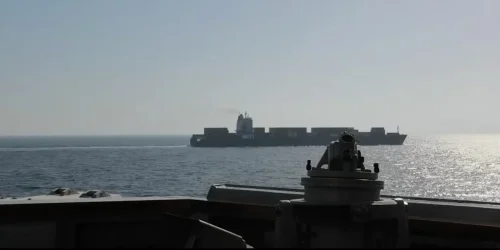
Imagine you're the captain of a massive cargo ship. For six hours, a US Navy destroyer has been ordering you to stop. You ignore them. Then, a chilling command crackles over the radio: "Vacate the engine room. We're prepared to subject you to disabling fire." Moments later, several 5-inch shells rip through your hull, destroying your propulsion. You're dead in the water.
This isn't a scene from a film. It happened this weekend to the Iranian-flagged M/V Touska. The US Navy's USS Spruance didn't just warn it—it shot to disable. This marks a dramatic, rare shift from threat to brutal reality in the escalating standoff with Iran. But why now? And what does this single, violent act tell us about what comes next?
From Training Manual to Live Fire: The Escalation Playbook Exposed
US forces train for this exact scenario constantly: a step-by-step escalation from warnings to disabling fire. But they almost never have to use it. This incident ripped that playbook from the training manual and made it terrifyingly real. "It's been rare in sanctions enforcement, but it is the expected step," confirms Bradley Martin, a former Navy captain.
The procedure is coldly logical. First, questions about origin and cargo. Then, a demand for a compliant boarding. If the ship refuses and tries to run, the next authorised step is to target its engines. This isn't about sinking the vessel; it's about making it helpless so it can be seized. The shocking audio and video released by the US military show this protocol in chilling, real-time action.
Why Shooting the Engine Was the Only Option
Boarding a hostile, 900-foot-long ship barreling through international waters is a nightmare scenario. "Disabling the engines... reduces their likelihood of resisting the boarding," explains Bryan Clark, a former Navy officer. It turns a dangerous chase into a static target. After the Touska was immobilised, US Marines fast-roped from helicopters to take control—a clear signal of the operation's seriousness.
The cargo ship's owner, Islamic Republic of Iran Shipping Lines, is already sanctioned for alleged ties to Iran's ballistic missile program. While its exact cargo is still being searched under US custody, the act itself sends a brutal message: the blockade is absolute.
A Dangerous New Normal: What Happens When the Next Ship Says No?
This is where the real consequence hits. The US has turned away 25 commercial vessels under this blockade. The Touska was the first known to refuse. Its fate is a stark warning to every other captain considering a run. Iran has called the interception an "act of piracy" and, critically, has now closed the Strait of Hormuz—a drastic retaliation never before seen.
As shaky ceasefire negotiations hang by a thread, the prospect of more confrontations looms large. "If a lot of these interdictions take place, the strain on Navy ships and even on Marine boarding teams will start to mount," warns Martin. This single shot across the bow hasn't just disabled one ship's engine; it may have ignited a far more volatile phase of conflict, where every transit through these tense waters becomes a potential flashpoint.