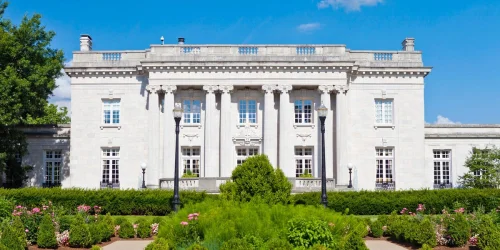
The official residences of U.S. governors serve as both private homes and public symbols of their states. Found in 45 of the 50 states, these mansions range from historic landmarks to modern constructions, each designed to reflect regional pride and heritage. Life within them is uniquely public, often involving public tours and significant security, while governors must navigate careful budgeting to avoid public criticism.
Notably, Arizona, Idaho, Massachusetts, Rhode Island, and Vermont do not have a designated governor's mansion. In these states, leaders typically receive a housing stipend or reside in their own private homes.
Historic Estates and Architectural Grandeur
Many governor's mansions are historic properties with deep ties to their states' past. Virginia's Executive Mansion, occupied since 1813, is the oldest continuously used governor's residence in the nation. In contrast, North Dakota's residence is a modern build, completed in 2018 at a cost of nearly $5 million.
The architectural styles are diverse. Alabama's 117-year-old mansion features Corinthian columns, while California's 1877 Victorian-style residence boasts Italian marble fireplaces. Kentucky's Beaux-Arts mansion is modeled after Marie Antoinette's home near Versailles.
Public Access and Notable Incidents
Public interaction is a hallmark of these homes. Many, like the mansions in Iowa and New Jersey, host annual Christmas tours. Alaska's mansion opens to the public once a year for a holiday tour, a tradition since 1913.
These residences have also been sites of notable events. In 2025, Pennsylvania's governor's mansion was damaged by an arsonist while the governor's family was inside; the perpetrator was later sentenced to 25 to 50 years in prison. Texas's mansion suffered major damage from a Molotov cocktail attack in 2008, requiring a four-year restoration.
Unique Features and Quirks
The homes are filled with distinctive state-themed elements and curiosities. Alabama installed a state-shaped swimming pool in the 1970s, while Oklahoma's mansion features a similar pool and a tennis court originally built as a helicopter landing pad for President Lyndon B. Johnson.
Colorado's mansion includes a three-handle draft beer system serving local craft beers. Utah's "Kearns Mansion" once had a large metal safe specifically for guarding candy and contains a basement bowling alley.
Some residences hold unusual artifacts. A painting of Russian Emperor Peter the Great in Alaska's mansion has BB-gun bullets near the subject's eyes, sparking a decades-long mystery. Georgia's mansion houses a signed, first-edition copy of "Gone With the Wind."
Maintenance, Renovations, and Controversy
Maintaining these historic or large properties is an ongoing challenge and public concern. Arkansas's residence underwent nearly $6 million in renovations since 1989. A $15 million renovation in Illinois allowed its mansion to reopen for public tours in 2018.
Controversies have arisen over costs and habitability. In South Carolina, poor renovation work in 2003 forced a governor's family to live in a one-room pool house. Idaho returned a donated hilltop mansion in 2013 due to high maintenance costs, opting instead for a housing stipend.
The future of these symbols of state power continues to evolve. In 2024, Montana's governor purchased a historic home to donate to the state for future use, addressing issues with the previous residence. These mansions remain working buildings, balancing their roles as family homes, historic sites, and enduring emblems of American statehood.