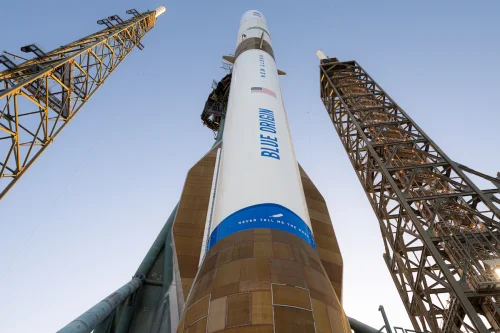
Imagine spending years and untold millions building a satellite, only to watch it be consigned to a fiery death in the Earth's atmosphere because a rocket put it in the wrong place. That’s the brutal reality for AST SpaceMobile today, after a critical failure by Jeff Bezos’ Blue Origin.
In what should have been a triumphant milestone—the first-ever re-flight of its massive New Glenn rocket—Blue Origin has instead suffered its first major mission failure. The rocket flew, the booster landed perfectly, but the upper stage placed the precious BlueBird 7 satellite into a useless, "off-nominal" orbit. The satellite is now doomed to be de-orbited and destroyed.
The Domino Effect: From Commercial Loss to Lunar Delays
This isn't just a simple insurance claim. While AST SpaceMobile confirms it's covered, the implications ripple far beyond one lost payload. Blue Origin is in a high-stakes race against time and SpaceX to become a cornerstone of NASA's Artemis moon program. The space agency, backed by the Trump administration, is pushing for an uncrewed lunar landing by the end of this presidential term.
Blue Origin CEO Dave Limp has vowed his company "will move heaven and Earth" to help NASA. But this failure throws a spanner in the works. The company had even considered using this very launch for a test of its own lunar lander prototype, opting instead for the commercial satellite. That decision now looks fateful.
A Story of Two Landings: Success and Failure in the Same Mission
The launch from Cape Canaveral seemed textbook. At 7:35 a.m., the New Glenn roared to life, its booster—flown just months prior—performing flawlessly. Minutes later, it stuck a perfect landing on a drone ship, a moment Jeff Bezos proudly shared on X, even receiving congratulations from rival Elon Musk.
But the celebration was premature. Roughly two hours later, the truth emerged in a terse statement: the upper stage had failed. The satellite was in the wrong orbit, too low to function. Blue Origin has gone silent since, offering no further details on what went wrong.
This starkly contrasts with SpaceX's current approach with Starship, which uses dummy payloads during its test campaign. Blue Origin's confidence in launching valuable customer hardware early has now backfired spectacularly.
What This Means for the Future of Space Access
The loss is a sobering reminder that space is hard, even for giants. While setbacks are part of the industry—SpaceX lost payloads on its 19th Falcon 9 flight and in a later pad explosion—the timing for Blue Origin is particularly poor.
With 45 more satellites to launch by 2026 and the eyes of NASA upon it, Blue Origin's next moves are under a microscope. The company must not only diagnose and fix this upper stage issue with extreme urgency but also rebuild customer and partner confidence. The dream of returning to the moon just got a little more distant, and the path forward for New Glenn suddenly looks much rockier.