Fusion power startup Inertia Enterprises announced on Tuesday that it has signed three agreements with the Lawrence Livermore National Laboratory (LLNL) to help bring the lab's laser-based fusion reactor technology to market. The deals could position Inertia ahead of rival companies in the race to commercialise fusion energy.
The collaboration focuses on inertial confinement fusion, the method proven at LLNL's National Ignition Facility (NIF). In 2022, the NIF became the first experiment to achieve "scientific breakeven," where a fusion reaction released more energy than the lasers used to ignite it.
From Lab Experiment to Power Plant
The partnership covers two strategic partnership projects and one cooperative research and development agreement. The organisations will jointly work on developing more advanced lasers and improving the performance and manufacturability of the fuel targets. Inertia is also licensing nearly 200 patents from the US government laboratory.
This close collaboration was a natural progression. Inertia's co-founder and chief scientist, Dr. Annie Kritcher, was a key designer of the landmark NIF experiment that achieved breakeven. The 2022 CHIPS and Science Act later enabled her to found the startup while maintaining her position at LLNL.
The Challenge of Repetition
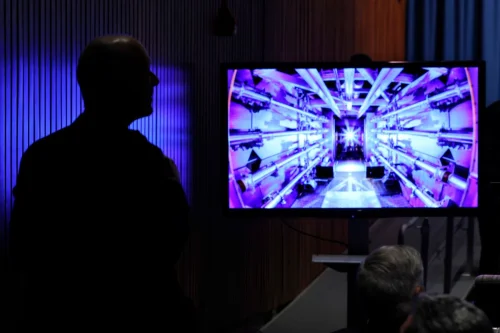
The NIF's process involves firing 192 laser beams into a vacuum chamber, where they converge on a gold cylinder called a hohlraum. This cylinder contains a diamond-coated fuel pellet filled with deuterium and tritium. The lasers vaporise the hohlraum, producing X-rays that compress and heat the pellet to fusion conditions.
The central engineering challenge for commercialisation is scaling this process from a single, monumental experiment to a system that can repeat it several times per second to generate continuous power for the electrical grid.
A Crowded Field of Startups
Inertia is not alone in pursuing this path. Other startups, including Xcimer Energy, Focused Energy, and First Light Fusion, are also working to turn inertial confinement fusion into a viable power source. A key hope is that modern, more efficient lasers can significantly lower the energy required for ignition, making the economics of a power plant feasible.
The laser-driven reactor concept was first theorised in the 1960s as a method for thermonuclear weapons research, with its energy potential recognised early on. Construction of the NIF began in 1997, taking 25 years to reach its historic breakeven milestone.
Funding and Future Steps
Inertia burst onto the scene in February with a $450 million Series A funding round, making it one of the best-capitalised companies in the fusion industry. The new agreements with LLNL represent a significant step in its plan to translate a proven scientific concept into a commercial technology.
The next phase of work will involve detailed engineering to address the formidable challenges of efficiency, repetition rate, and material durability, with the long-term goal of developing a prototype power plant.