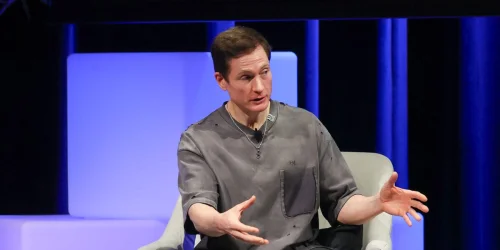
Bryan Johnson, the 46-year-old tech entrepreneur known for his multi-million dollar pursuit of biological age reversal, has publicly addressed a personal parenting oversight. He revealed that he failed to adequately educate his 20-year-old son about sex, a realisation that led him to write a detailed instructional manual on intimacy.
Johnson made the comments during an interview with Business Insider's executive editor Zak Jason at 'The Long Play' event on Tuesday. He stated that while the "basics" were covered, his son's "only source of education has been porn," a situation he believes is common for an "entire generation."
A Corrective 'Instruction Manual'
"What I wrote was basically an instruction manual on how to have sex," Johnson explained. He described the content as "like 10 lessons" aimed at educating people on "how to create good relationships in a loving manner."
One key lesson addresses the differing arousal patterns between men and women, which Johnson noted can create a "mismatch" if partners proceed at different speeds. Despite some characterising it as a "'50 Shades of Grey' longevity version," Johnson emphasised its practical, educational intent.
Openness and a 'Cool' Son
Johnson spends approximately $2 million annually on his rigorous health and longevity regimen, which has previously included publicly discussing wearing a device to monitor nocturnal erections. He has long framed sexual health as integral to his overall approach.
Regarding his son's reaction to the frank discussion, Johnson said, "My son is so cool," indicating his openness was largely accepted. He argued that founders operating in intense "monk mode" often overlook the role of relationships, stating that "a good partnership is really beneficial for mental health and physical health."
Context and Broader Implications
The entrepreneur's revelation highlights ongoing societal debates about comprehensive sex education and the influence of easily accessible online pornography. Johnson's direct, if belated, intervention underscores a gap he perceives in modern parenting and youth guidance on intimate relationships.
His comments reframe aspects of his public persona, connecting his data-driven health optimisation with the more qualitative, human elements of wellbeing and connection.