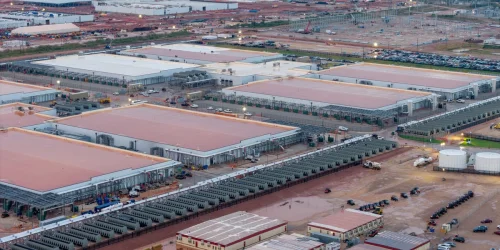
Maine is on the cusp of becoming the first state in the United States to successfully impose a temporary ban on the construction of new artificial intelligence (AI) data centres. This week, the state's House and Senate approved the bill's text, clearing the way for a final vote before the legislature adjourns on 15 April.
If passed, the legislation would impose a moratorium on AI data centre construction until 1 November 2027. The move is a response to rising local resistance across the country to the rapid expansion of power-hungry facilities, with communities raising concerns about their impact on electricity rates, local infrastructure, and the environment.
National Trend Meets Local Resistance
A Business Insider review of state legislative dockets found that lawmakers in at least 12 states proposed similar moratorium bills in 2026. Proponents argue that a pause in development would give state agencies time to study the impacts of data centre growth. However, of these 12 bills, only Maine's has not stalled out or been voted down.
"Congress is way behind where it should be in understanding the nature of this revolution and its impacts," said Senator Bernie Sanders last month, as he and Representative Alexandria Ocasio-Cortez introduced federal legislation calling for a national pause.
The US currently has approximately 4,000 data centres, with another 3,000 either proposed or under construction, according to the tech coalition American Edge Project.
State-by-State Efforts Stalled
Legislators in states with mature data centre markets, such as Georgia and Virginia, have had less success. A group of Democrats in Georgia's House proposed a temporary halt, but House Bill 1059 never made it to a floor vote. Georgia is home to 93 data centres, including a large xAI facility in Atlanta owned by Elon Musk.
In Virginia, home to the world's largest concentration of data centres, lawmakers reviewed a moratorium bill and decided to postpone discussion until 2027. The state's sales tax exemption for computer equipment, a key industry incentive, cost the state budget $1.9 billion in the 2025 fiscal year, according to the Department of Taxation.
Local Actions Fill the Void
While state-level moratoriums have largely failed, local communities are taking action. This week, Port Washington, a Milwaukee suburb, became the first city in the country to pass a data centre referendum, requiring local voter approval for all future tax breaks.
Other local moratoriums have been approved in Michigan (East Lansing, Huron County), Oklahoma (Tulsa), and notably, by the Seminole Nation in March, marking the first indigenous group to ban data centres in its territory.
Final Hurdle and Future Implications
Maine's moratorium is not yet guaranteed. The bill must pass a final vote and then be signed into law by the governor, who could potentially veto it. The state is not a major data centre hub, but has seen increased developer interest.
The outcome in Maine is being closely watched as a potential model for other states grappling with the rapid, largely unregulated expansion of AI infrastructure and its societal costs.