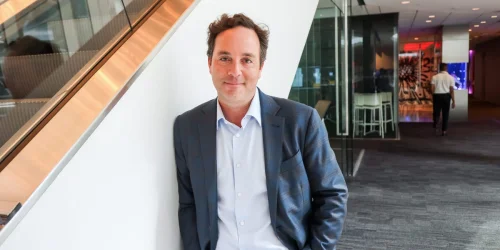
Spencer Rascoff, the CEO of Match Group, is spearheading a major overhaul of its flagship app, Tinder, in an effort to reverse declining user numbers and combat widespread "swipe fatigue". The executive, who met his wife before any major dating app existed, is applying lessons from his time as co-founder of Zillow to restructure the company and refocus on Gen Z users.
Match Group's stock has fallen sharply from around $150 during the post-pandemic dating boom to approximately $30, and was recently removed from the S&P 500 index. While the company's Hinge app is reportedly "on a path to be a billion-dollar business," Tinder's annual downloads have shrunk from 61 million in 2021 to 48 million in 2025, according to data from Appfigures.
Restructuring for a "Startup" Feel
Since taking over, Rascoff has moved quickly to decentralise power at Tinder. He replaced former Tinder CEO Faye Iosotaluno and oversaw the departures of other long-standing executives, including Hinge founder Justin McLeod and Chief Operating Officer Hesam Hosseini.
He has reorganised Tinder's product and engineering teams into smaller, independent "pods" based on Amazon's "two-pizza rule," aiming to foster faster innovation. "Tinder product and engineering used to be a very large, monolithic organization where the priorities of what gets built came from on high," Rascoff stated. This change, he claims, has "unleashed an enormous amount of innovation that was buried."
Focus on "Fun" and Gen Z
At the core of Rascoff's strategy is a renewed mission statement for Tinder: to be "the most fun way to spark something new with someone new." He acknowledges that some users find dating apps "tedious" and is introducing features designed to inject more enjoyment into the experience.
The company is heavily targeting Generation Z, which Rascoff sees as critical for future growth. He regularly consults with Match Group's Gen Z employee resource group and emphasises creating "lower pressure" ways to date, including through in-person events. "We're meeting Gen Z users where they are," he said.
Market Perception Versus User Reality
Despite negative perceptions of "swipe fatigue" and poor match quality—especially among women, as highlighted in a 2022 Pew study—Rascoff and some analysts believe a turnaround is possible. M Science research analyst Chandler Willison noted that Rascoff has "done a really good job pushing back" against the idea of irreversible "industry-wide malaise."
While concrete data on a recovery is still limited, with monthly downloads holding steady at around 3.9 million, anecdotal evidence suggests some users are returning to Tinder for its perceived ease of use compared to competitors like Hinge.
Rascoff, who maintains a Tinder profile "for research," remains confident. "If I were single, I would certainly do that," he said, asserting that authentic users who invest time can still find their spark on the platform. The success of his strategy will determine if Tinder can reclaim its momentum in a rapidly evolving dating landscape.