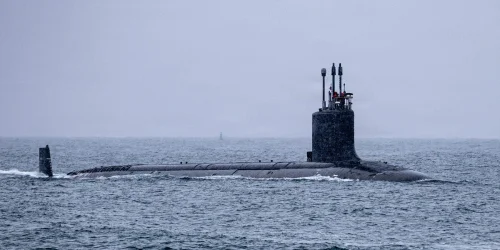
The United States Navy is investing $900 million in highly automated factories to build components for its Columbia- and Virginia-class nuclear submarines. The move is a direct response to severe worker shortages across the submarine industrial base, which have caused significant delivery delays and cost overruns.
Navy leaders and congressional analysts have stated that thousands of additional workers are needed to meet production targets. To circumvent this bottleneck, the service is turning to advanced manufacturing and artificial intelligence to accelerate output and modernise its shipbuilding infrastructure.
First 'Factory of the Future' Opens in Alabama
The first of these new facilities, named Factory 4, opened last week in Alabama, built by the advanced manufacturing company Hadrian. It will produce integrated parts and systems for the Navy's top-priority submarine programmes.
"This is not just another factory," Navy Secretary John Phelan said at the ribbon-cutting ceremony. "This is a different model." He explained that Hadrian builds complete production systems, transforming raw material into test-ready hardware in a single, continuously running facility—a process that previously required dozens of separate suppliers.
Automation to Train Workers and Free Shipyards
Hadrian states its AI-driven automation significantly boosts productivity and can train technicians in 30 days or less. Two more similar facilities are planned. This "distributed shipbuilding" approach allows dedicated component factories to operate away from main shipyards, reducing bottlenecks.
"These factories of the future might be several states away from the yards where the ships are ultimately built, but by taking on this work, they reduce bottlenecks, having a profound effect on the speed of delivery," said Jason Potter, who is performing the duties of Assistant Secretary of the Navy for research, development, and acquisition.
Broader Push for AI in Shipbuilding
The drive for increased automation is a key priority under the current naval leadership. A central initiative is the new Shipbuilding Operating System (Ship OS), a half-billion-dollar investment powered by Palantir's Foundry and Artificial Intelligence Platform.
Early results have been dramatic: at General Dynamics Electric Boat, submarine schedule planning was reduced from 160 manual hours to under 10 minutes. At Portsmouth Naval Shipyard, material review times for submarines went from weeks to under an hour. Ship OS is slated for expansion across two major shipbuilders, three public yards, and 100 suppliers.
Path to Full Production
Factory 4 will require 18 to 24 months to reach full-rate production. This timeline includes standing up the automated lines, qualifying components, and ensuring compliance with strict programmes like the submarine safety protocol.
In a statement, Secretary Phelan framed the investment as essential for national security: "By enabling industry to adopt AI and autonomy tools at scale, we're helping the shipbuilding industry improve schedules, increase capacity, and reduce costs. This is about doing business smarter and building the industrial capability our Navy and nation require."