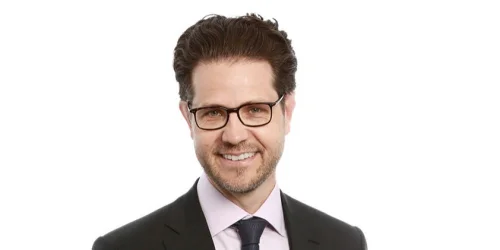
Kurt Strovink, the senior partner who leads McKinsey & Company's global CEO services, has stated that the current era presents one of the most challenging environments for chief executives. With three decades of experience advising top leaders, Strovink highlighted that the volume of critical issues demanding a CEO's attention has surged dramatically.
"They've always had to separate the critical few from the important many," Strovink told Business Insider. "It's just that the critical few are almost double-digit now." This increased pressure is reflected in leadership trends, with the average tenure of outgoing CEOs falling to 7.1 years in 2025, down from 8.3 years in 2023, according to data from Russell Reynolds Associates.
The Relentless Pace of AI Demands
In 2026, artificial intelligence dominates the executive agenda, requiring near-constant strategy updates to implement the fast-evolving technology across all business functions. Companies are moving beyond pilot programmes and are now focused on scaling AI applications. The relentless pace has contributed to high-profile departures, with former leaders of Coca-Cola and Walmart citing AI's transformative demands as a factor in their decisions to step down.
"With what's happening with AI, I could start this next big set of transformations with AI, but I couldn't finish," said Doug McMillon, who stepped down as Walmart's CEO in January. Beyond strategy, CEOs must also navigate the significant ethical implications and risks associated with AI deployment.
Navigating Politics and Geopolitical Fragmentation
Modern CEOs are increasingly forced to operate like heads of state, determining when and how to engage on divisive policy and political issues. "A lot of CEOs would say, 'I never wanted to be a politician,'" Strovink noted, adding that executives now must discriminate between worthy causes and topics outside their organisation's remit. Many are engaging more with public policy and government relations specialists.
Simultaneously, geopolitical instability and economic volatility require executives to build resilient systems capable of withstanding trade policy shifts and supply chain disruptions. A McKinsey report co-authored by Strovink stated that modern CEOs "now need to actively develop their geopolitical IQ," preparing strategies for both a world of open trade and one of increased fragmentation.
The Human Capital and Personal Challenge
Motivating the next generation of leaders presents another distinct hurdle, as Millennials and Gen Z employees are often driven more by purpose and meaning than traditional corporate ladder-climbing. Juggling this expanded set of responsibilities without burning out is a critical skill. "The CEO role is the only role that you can't outwork," Strovink said. "It will outwork you."
He emphasised that personal operating models are more crucial than ever, stating, "I think you have to be much better at your personal operating model than five or ten years ago." Despite the immense challenges, Strovink concluded that the potential impact for those who can navigate this complex landscape has "probably never been higher."