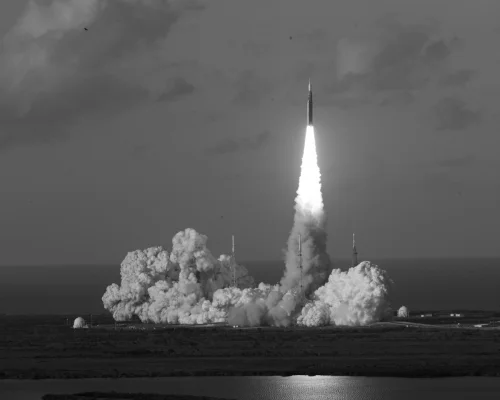
NASA's Artemis II mission, carrying four astronauts on a lunar flyby, represents the agency's last major attempt to send humans to deep space without significant involvement from venture-backed technology firms. The mission, launched aboard the Space Launch System (SLS) rocket, is a culmination of a program with origins in the Bush administration but is now giving way to a new era led by companies like SpaceX and Blue Origin.
The SLS, built by legacy contractors Boeing and Lockheed Martin with contributions from Airbus, is the world's most powerful operational rocket. However, its development was marked by cost overruns and delays, contrasting sharply with the rapid, reusable rocket advancements pioneered by SpaceX. This disparity has prompted a strategic realignment at NASA towards commercial partnerships for future lunar landings.
Private Sector Takes the Lead for Lunar Landings
For the next phase of returning humans to the lunar surface, NASA has turned to the private sector. In 2021, SpaceX won a controversial $2.9 billion contract to use its Starship vehicle as a human landing system. Blue Origin was added to the program in 2023 to develop a competing lander. This shift means the pressure for the next crewed landing is squarely on these commercial entities, not NASA's traditional contractors.
"This is an architecture that no NASA administrator that I’m aware of would have selected had they had the choice," former NASA administrator Jim Bridenstine told Congress last year, highlighting the unconventional nature of the reliance on Starship, which requires multiple launches to refuel for a Moon journey.
New Leadership and a Streamlined Strategy
The program is undergoing a major overhaul under new NASA Administrator Jared Isaacman, a billionaire payments entrepreneur promoted by Elon Musk and nominated by President Donald Trump. After taking office in late 2025, Isaacman made decisive changes to refocus the lunar program.
In March 2026, he scrapped plans for the lunar Gateway space station and cancelled expensive upgrades for the SLS, decisions long criticised by outside observers as wasteful. This move signals a full commitment to the new generation of private space companies to achieve lunar goals.
The Path Forward and Geopolitical Stakes
NASA now plans a critical test in 2027: an Orion spacecraft rendezvous with one or both commercial landers in orbit. This would precede two potential crewed Moon landings in 2028. This timeline increases scrutiny on SpaceX's upcoming Starship test flight and Blue Origin's planned uncrewed lunar lander test this year.
The strategic shift carries high geopolitical stakes. With China pursuing a disciplined plan to land a citizen on the Moon by 2030, any delays by the US partnership with Silicon Valley will be closely watched. The success of this public-private model will demonstrate if Western commercial space innovation can maintain a technological edge in the new space race.