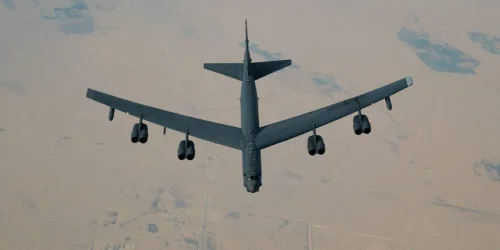
The United States Air Force has confirmed that B-52 Stratofortress heavy bombers are now conducting combat missions over Iran. This development comes as the US military announced it has established air superiority over the country after one month of sustained conflict.
The introduction of the iconic, long-range bombers represents a major escalation in the air campaign. Military analysts suggest their operational use indicates that Iran's integrated air defence systems have been effectively suppressed, creating a permissive environment for these large, non-stealthy aircraft.
Strategic Shift in Air Campaign
The B-52 Stratofortress, a cornerstone of US strategic bombing since the 1950s, is not designed to operate in contested airspace where it would be highly vulnerable to modern surface-to-air missiles or drone attacks. Its deployment for combat sorties within Iran therefore signals a significant degradation of Iran's defensive capabilities.
"The B-52 isn't built to fly in areas where it's more vulnerable to missile or drone attacks," a defence official noted, underscoring the assessment of US air dominance. The declaration of air superiority means US and allied forces can operate aircraft with a high degree of freedom over Iranian territory.
Implications and Historical Context
The achievement of air superiority within one month marks a rapid development in the conflict. It allows for more sustained and heavier bombing campaigns against strategic targets, including hardened facilities and infrastructure, which the B-52's large payload capacity is specifically designed to destroy.
Historically, establishing air superiority has been a critical prerequisite for successful large-scale military operations. The move to deploy strategic bombers like the B-52 follows established US military doctrine, where such assets are committed only after enemy air defences are considered sufficiently degraded.
Future Operations and Regional Stability
With air superiority declared, military planners can now utilise a broader range of aircraft with less restrictive rules of engagement. The presence of B-52s, capable of carrying both conventional and nuclear ordnance, serves as a potent symbol of US air power and a warning to other regional actors.
Pentagon officials have stated that operations will continue to focus on degrading Iran's military capacity and command structures. The next phase may involve more persistent intelligence, surveillance, and reconnaissance (ISR) flights and increased sortie rates from various aircraft, capitalising on the controlled airspace.