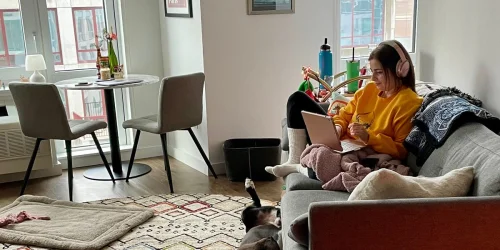
A New Yorker who won a coveted affordable housing lottery apartment in 2021 now faces a spatial crisis as her family expands, trapped between an unaffordable rental market and a prized, yet cramped, home. Caralynn, a writer, secured the 800-square-foot, one-bedroom apartment in a desirable New York City neighbourhood after her application, number 41 out of hundreds of thousands, was selected in the city's competitive housing lottery.
At the time of the move, the apartment, with amenities including in-unit laundry and building facilities like a pool, represented a significant upgrade. Despite a rent of $2,295—considered "affordable" for those earning 130% of the Area Median Income—it was approximately $1,000 less than the median market rate for a one-bedroom in the area. Her previous rent-stabilised Brooklyn apartment cost $1,250 monthly.
The Family Outgrows the Dream
The household dynamics shifted dramatically after Caralynn moved in. Her then-boyfriend became her husband and a permanent resident, and their daughter was born in late 2022. The family, now comprising two adults, a toddler, and a dog, has exhausted nearly every possible configuration of the one-bedroom space in an attempt to make it work.
"We've trialed dine-in kitchen setups versus separate dining spaces in the living area and tried creating a tiny bedroom for my daughter in my onetime office nook," Caralynn explained. The couple has even used part of the living room as a sleeping area to give their daughter the sole bedroom. She has spent "countless hours researching Murphy beds" as a potential space-saving solution.
The Affordable Housing Trap
Leaving the apartment, however, is a financially daunting prospect. As a rent-stabilised unit, its increases are capped by law; the rent has risen only to $2,550 since 2021. In stark contrast, the median market rate for a one-bedroom in their neighbourhood now exceeds $4,000, with two-bedrooms averaging over $6,000.
This creates a powerful economic lock-in effect. "Giving this apartment up for a modicum more space feels foolish," Caralynn stated, acknowledging the neighbourhood's family-friendly perks like good schools, parks, and transit access. Moving out of New York City entirely would mean sacrificing the cultural and entertainment amenities they value.
A Lottery of Diminishing Odds
The primary hope for more space lies in winning the housing lottery again. The odds are steep: a New York City Department of Housing Preservation and Development representative told Business Insider that the system receives about 3.5 million applications annually, with roughly 450 applicants competing for each available rental unit.
To date, Caralynn has submitted 188 lottery applications. While she has qualified for other apartments, none have materialised into a viable move, either due to insufficient size or less desirable locations. She now balances "immense gratitude" for their affordable home with the "stress" of an impending spatial crunch.
"I have no idea whether lightning will strike twice for us," she said, uncertain if they will secure a larger affordable unit before their household income exceeds the programme's maximum threshold, potentially pricing them out of the lottery system altogether.