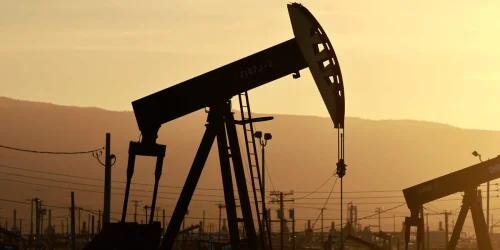
Global oil prices rose sharply as markets reopened on Sunday, with Brent crude reaching $115.73 per barrel. The increase of approximately $3 from Friday's close comes as foreign ministers from key Middle Eastern nations gathered in Islamabad to discuss efforts to end the ongoing conflict between the United States, Israel, and Iran.
The war, which entered its fifth week at the end of February, has severely disrupted energy markets. Iran's retaliation, which has effectively closed the Strait of Hormuz, is a primary driver. An estimated 20% of the world's oil supply and a significant portion of its liquified natural gas transits through this critical waterway off Iran's coast.
Economic Impact and Supply Chain Strain
The conflict's impact extends beyond the strategic strait. Major oil hubs across the Middle East have also sustained damage, placing further strain on the global supply chain. For consumers, particularly in the United States, this translates directly to higher fuel costs. The national average price for a gallon of gasoline stood at $3.98 on Sunday, a one-dollar increase from the $2.98 average recorded in February before hostilities began.
In response to the market uncertainty, the International Energy Agency (IEA) has authorised the release of 400 million barrels of oil from strategic reserves. This move aims to stabilise prices and mitigate the economic shockwaves from the prolonged conflict.
Diplomatic Efforts for Peace
The diplomatic push is being led by Pakistani Foreign Minister Mohammad Ishaq Dar, who is hosting counterparts from Egypt, Saudi Arabia, and Turkey for a two-day meeting in Islamabad. In a statement shared on the social media platform X, Dar characterised the discussions as "very detailed and in-depth."
"We also discussed the possible ways to bring an early and permanent end to the war in the region," Dar stated. "We agree that the war is not in favour of anyone and would only lead to death and destruction."
Dar expressed cautious optimism, noting that both the United States and Iran have "expressed their confidence in Pakistan" to facilitate peace talks. "We have remained actively engaged with the US leadership as well, as part of our efforts to de-escalate the situation and find a peaceful resolution of the conflict," he added.
Military Outlook and Official Statements
Despite these diplomatic initiatives, there is no clear path to a ceasefire. While US Energy Secretary Chris Wright stated on 8 March that the conflict would not be "long-term," neither the Trump administration nor Iranian officials have publicly outlined an exit strategy. Military preparations suggest a protracted engagement; The Washington Post reported on Saturday that the Pentagon is preparing for weeks of ground operations within Iran.
The situation remains volatile, with global energy security hanging in the balance as diplomatic efforts race against military escalation and its continuing impact on world markets.